
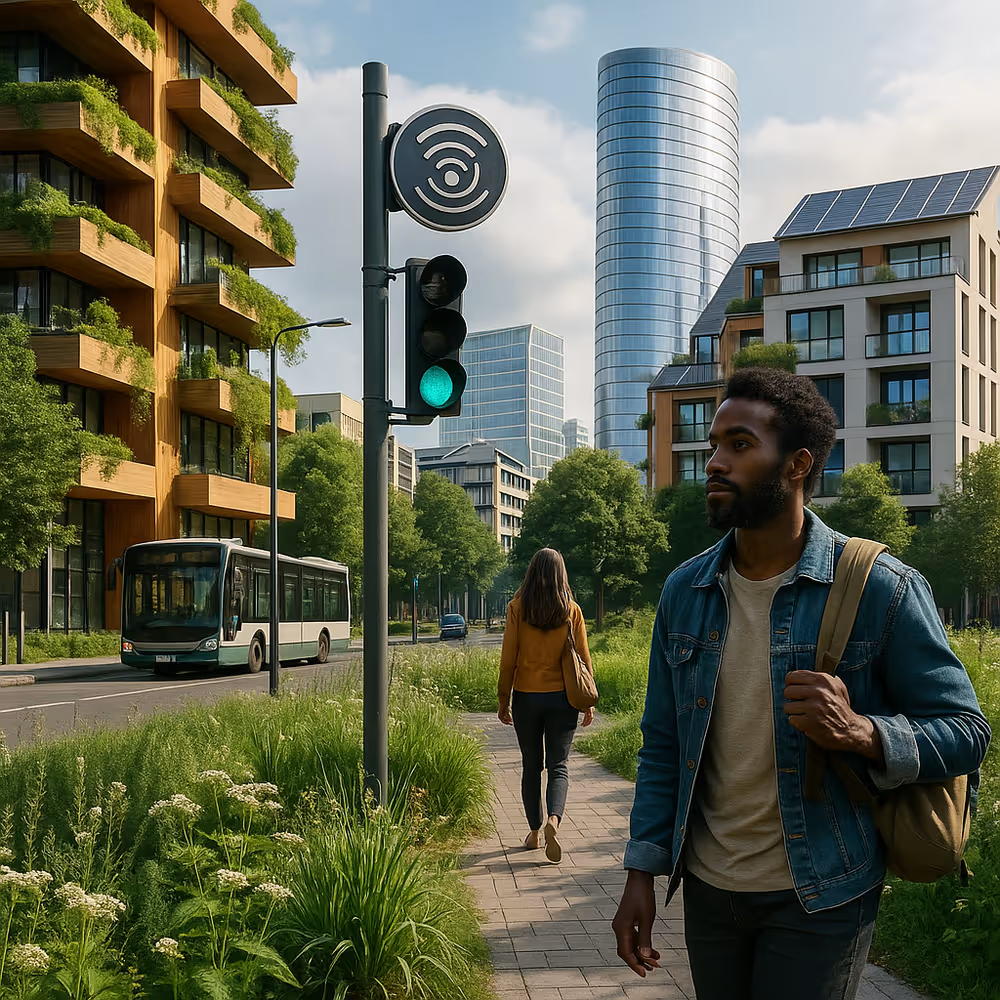
The dream of a “smart city” is seductive: traffic lights that sync with real-time flows, AI systems that predict and prevent crime, buildings that generate as much energy as they use.
Governments and tech giants alike envision hyperconnected hubs where sensors, data, and automation make life seamless.
But here’s the catch: a city isn’t truly smart if it isn’t equitable.
Too often, “smart” means wealthy districts brimming with innovation while low-income communities remain excluded, over-surveilled, or even displaced.
The core question is sobering: who gets to belong in tomorrow’s smart city, and who gets left behind?
The Promise vs. Reality ⚖️
The Promise
- Efficient transportation 🚌
- Cleaner energy 🌱
- Safer streets 🚦
- Better access to healthcare 🏥
The Reality
- Smart services priced beyond reach 💸
- Digital divides that reinforce old inequities 📴
- Surveillance that erodes civil liberties 👁️
- “Innovation districts” built for investors, not citizens 🏙️
The disconnect between vision and practice undermines UN SDG #11: Sustainable Cities and Communities, which calls for inclusivity, resilience, and equity in urbanization.
Case Studies: Four Smart Cities, Four Lessons 🌍
Songdo, South Korea: The Utopian Mirage
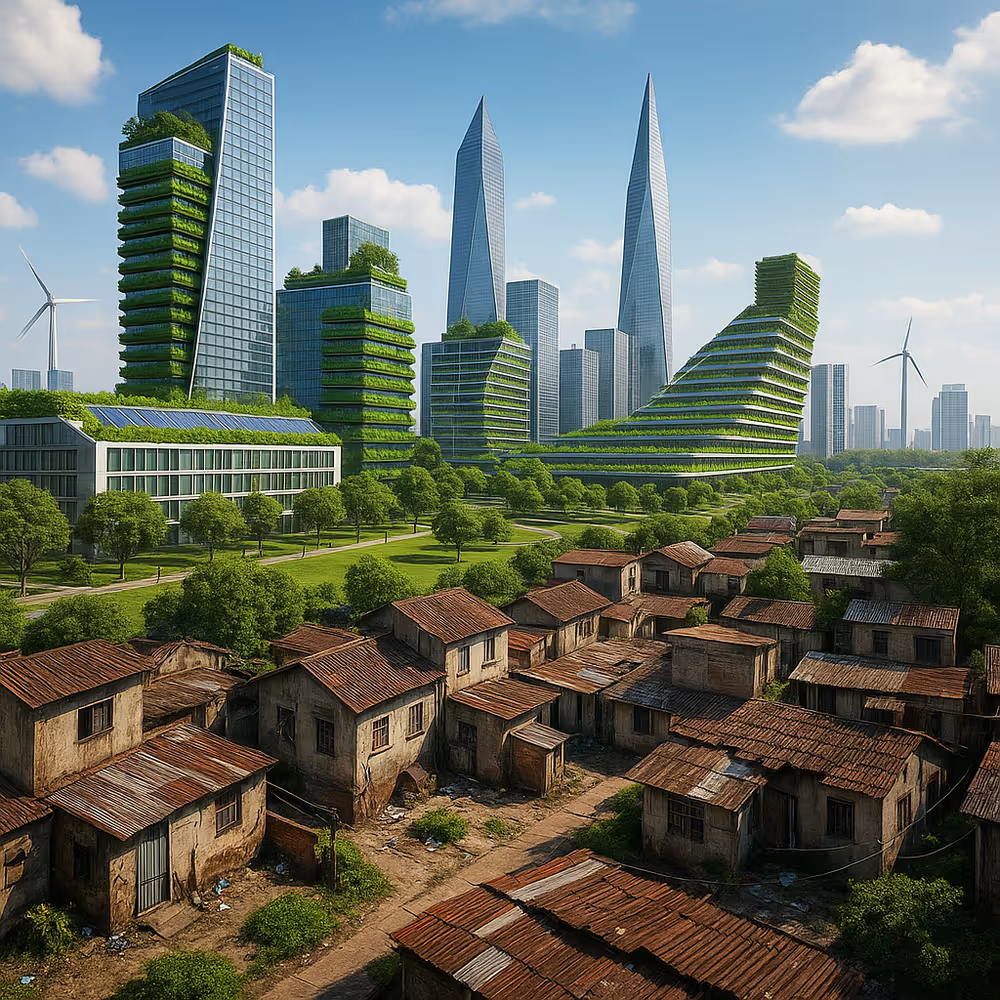
Songdo was imagined as a gleaming metropolis of the future, with IoT-driven infrastructure, self-sustaining systems, and data-informed governance.
But in reality, it remains underpopulated and unaffordable—a high-tech ghost city more appealing to foreign investors than ordinary Koreans.
Lesson: A city without people isn’t smart—it’s sterile.
Barcelona, Spain: A Citizen-Centric Model
Barcelona resisted the corporate-led model and instead created open-source platforms, public Wi-Fi, and participatory budgeting.
By reclaiming citizen data from private hands, it built digital systems that serve people, not profit.
Lesson: Smart cities must redistribute power—not just deploy technology.
Nairobi, Kenya: Konza Technopolis and the Risk of Elitism

Kenya’s “Silicon Savannah,” Konza Technopolis, promised to catapult the country into the digital age.
Yet delays, high costs, and limited public buy-in risk turning it into an elite enclave, disconnected from the struggles of Nairobi’s majority who contend with inadequate housing, traffic, and informal economies.
Lesson: Prestige projects can widen inequality if they ignore everyday needs.
Toronto, Canada: Quayside and the Backlash Against Surveillance
Google’s Sidewalk Labs proposed a data-driven “city within a city” on Toronto’s waterfront.
But public outrage over surveillance, privacy concerns, and corporate control sank the project.
Lesson: Without trust, even the most sophisticated technology will fail.
Global North vs. Global South: The Unequal Circuitry 🌐
- Global North: Cities like Singapore, Amsterdam, and Copenhagen excel with green tech, smart transit, and open data—yet even there, poorer communities risk exclusion if they lack digital skills or connectivity.
- Global South: In countries like India and Nigeria, smart city programs often prioritize business districts and prestige zones while neglecting informal settlements where the majority live.
- Digital Divide: Uneven infrastructure, fragile networks, and high costs make “smartness” a privilege of the few. Imported, copy-paste models from the North rarely adapt well to local realities.
Impacts on UN SDGs 📊
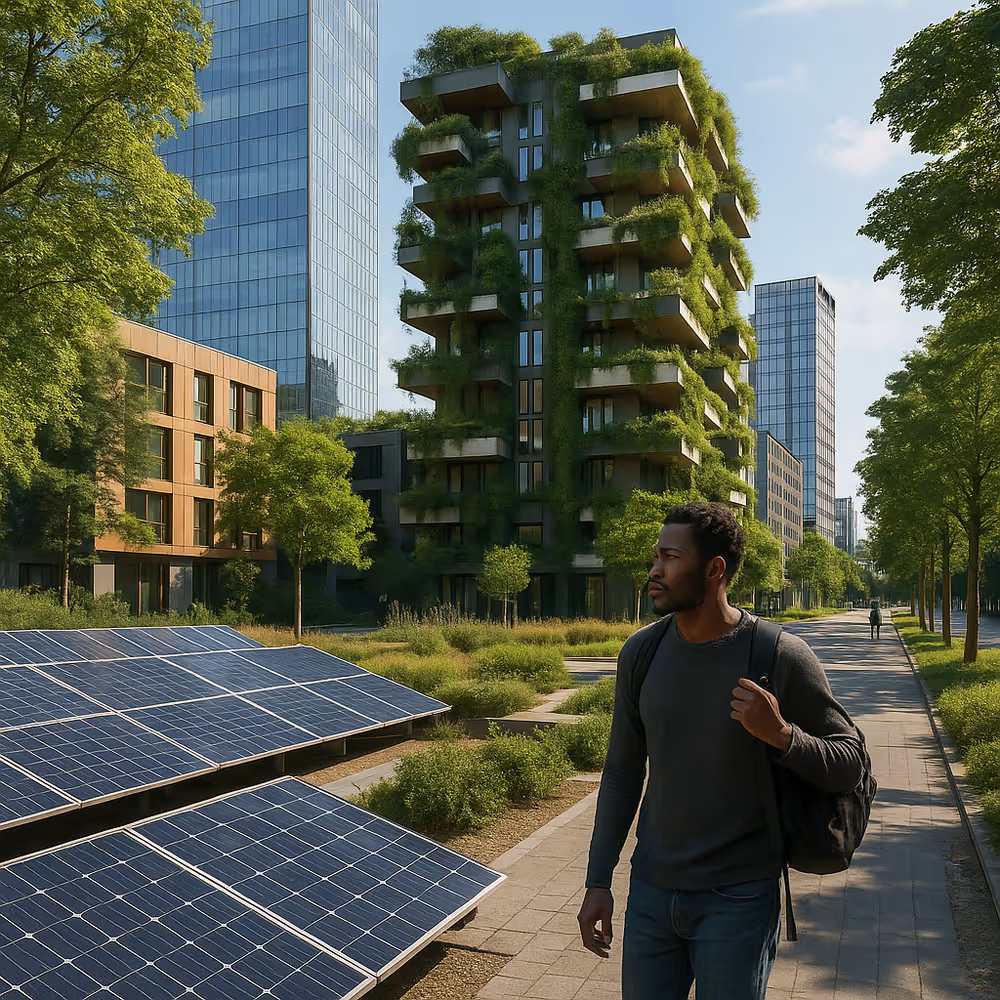
SDG 11 (Sustainable Cities & Communities): Without inclusion, sustainability becomes performative.
SDG 10 (Reduced Inequalities): Smart systems risk widening digital and economic divides.
SDG 16 (Peace, Justice & Strong Institutions): Data misuse and surveillance erode civic trust.
SDG 13 (Climate Action): Smart climate projects often serve elites (EV fleets, green high-rises) while leaving poorer residents vulnerable to floods, pollution, and heat waves.
Correcting the Dumb Inequities: Actionable Solutions 🛠️
Community-First Design 🏘️
Embed residents—especially marginalized groups—into design and decision-making.
Expand participatory budgeting and citizen assemblies.
Digital Inclusion 🌐
Provide affordable or subsidized internet access.
Build mobile-first platforms accessible to low-cost devices.
Data as a Public Good 🔑
Ensure urban data belongs to communities, not corporations.
Create watchdog mechanisms to prevent surveillance overreach.
Adaptation over Copy-Paste 🌍
Customize smart solutions to local realities (e.g., solar-powered microgrids in rural Africa instead of costly central systems).
Climate-Justice Lens 🌱
Prioritize vulnerable communities in climate-smart infrastructure (e.g., mangrove restoration, flood defenses, affordable green transit).
Conclusion: A Truly Smart City Is a Fair City 🧭
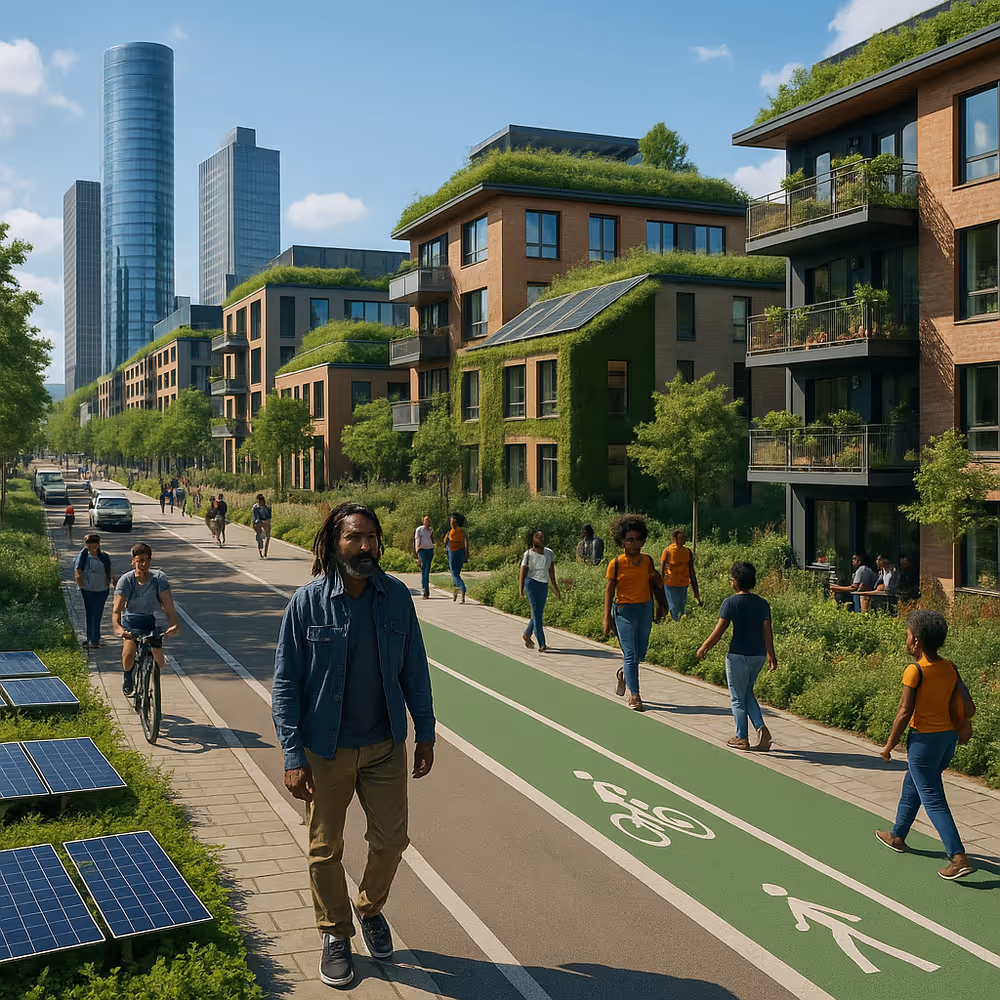
The term “smart” risks becoming hollow if it only measures efficiency and tech sophistication.
A city wired with sensors but blind to inequality is not smart—it’s unjust.
The real test of progress is whether the poorest resident feels safer, healthier, and more empowered today than yesterday.
👉 The challenge of our era is not to innovate faster but to innovate fairer.
0 Comments
Leave a comment