
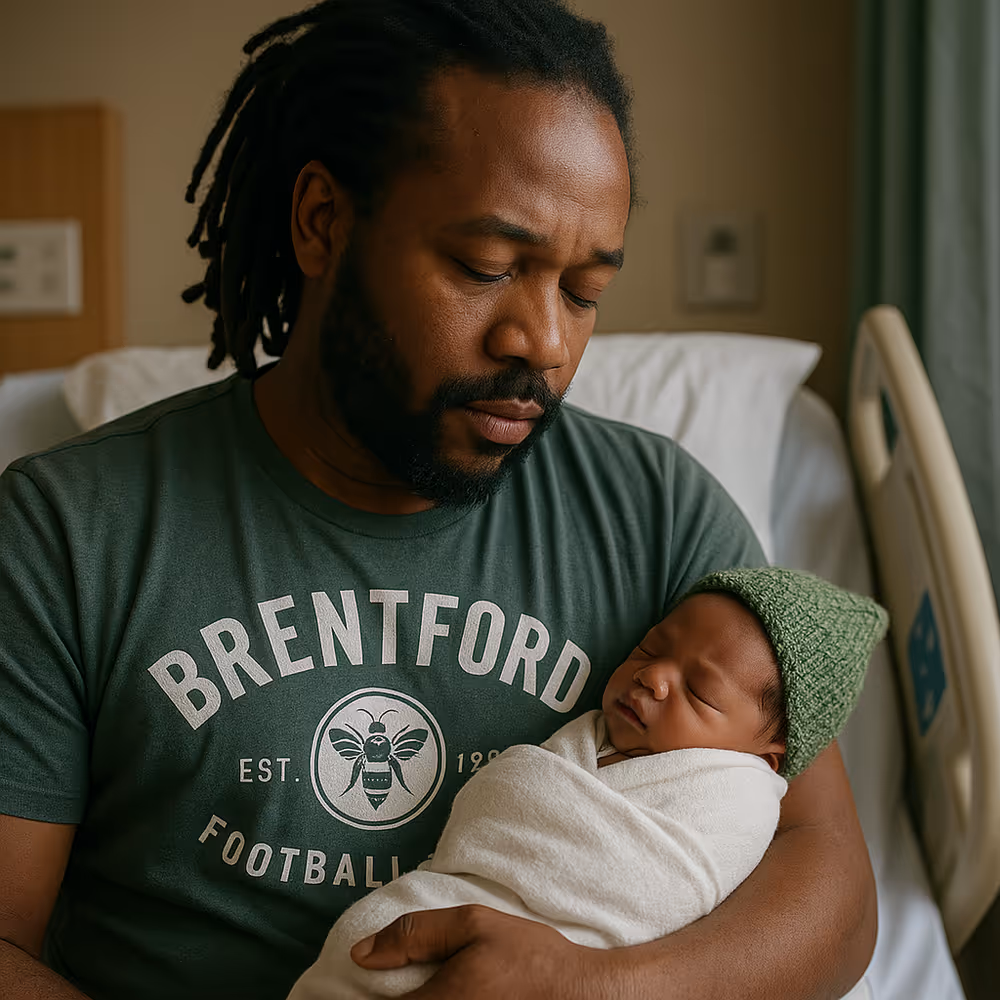
The night my daughter Haidee came into the world, I felt both wonder and warning.
Her first cry was life’s oldest song—yet beneath its beauty echoed a question:
What kind of planet will she inherit?
In that quiet hospital room, I made a vow.
I would use every skill at my disposal—every article, campaign, and client project—to defend her right to a livable world. Not with protests in the street, but with words that awaken and stories that sustain.
Parenthood clarified something no textbook ever had: we may secure the best schools and technologies for our children, yet we fail them if we gift them a dying planet.
Eco-literacy, I realized, is not an elective; it is survival literacy.
To raise a regenerative generation is to raise children who know that humanity is a part of Earth, not apart from it.
Finding My Green Compass 🌿
My own awakening began unexpectedly in 2024, when I worked with Tanya Goodwin’s Botanical Chemist, Palm Cove.
That collaboration introduced me to sustainability not as jargon but as ethic.
Every ingredient, every sourcing decision, every label carried ecological consequence.
While crafting brand stories, I saw how a single phrase—“responsibly harvested” or “reef-safe formulation”—was not cosmetic marketing but moral communication.
The experience inspired my first deep-dive blog series on the pharmaceutical industry’s shift toward ESG (Environmental, Social & Governance) frameworks, exploring how wellness companies could become stewards of both people and planet.
Later, while working with Paul Williams at Meliora, I dissected each of the 17 UN Sustainable Development Goals, connecting them to business models, consumer behavior, and cultural narratives.
These projects reshaped my worldview. Sustainability stopped being a professional topic—it became my calling.
What Eco-Literacy Really Means (and Why It’s Urgent) 🌱
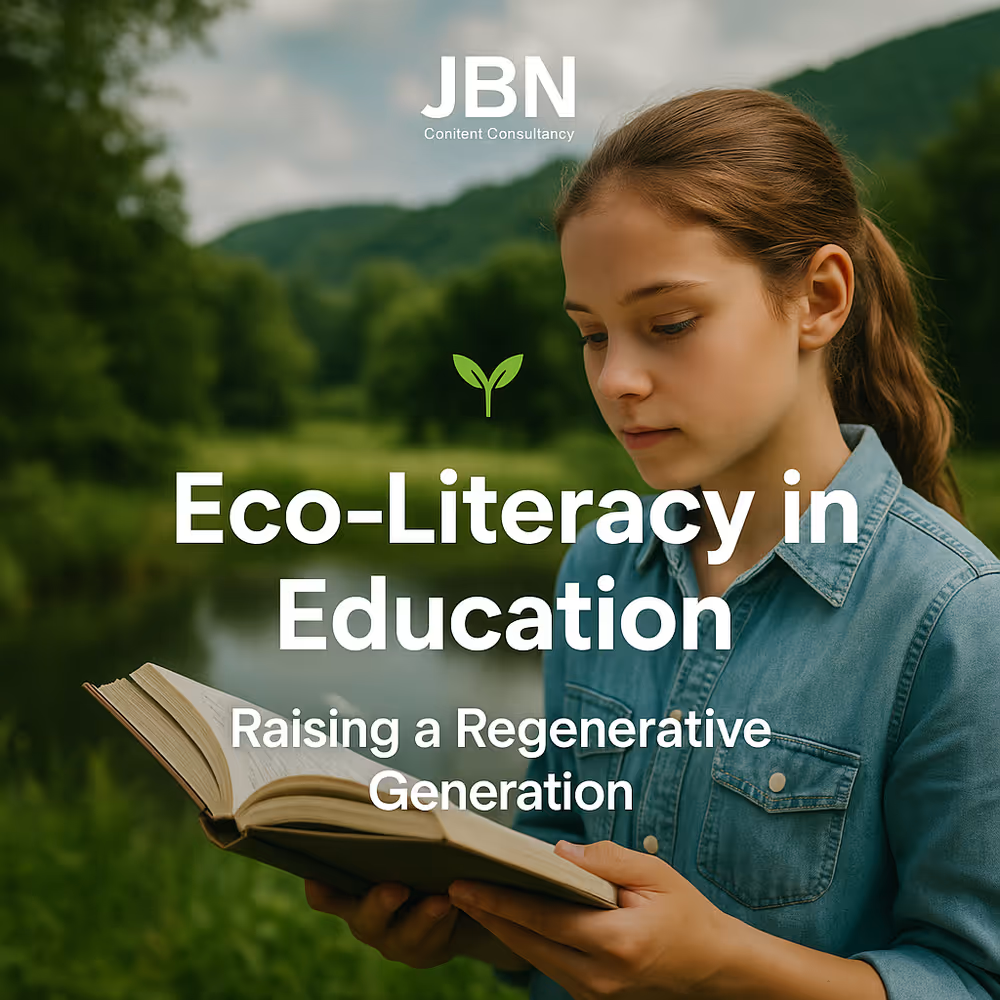
Eco-literacy means understanding the living systems that make life possible: water cycles, food webs, energy flows, and the delicate equilibrium between species and climate.
For decades, our schools have taught how to succeed in the economy, not how to coexist with ecology.
According to UNESCO, slightly more than 50% of national curricula worldwide mention climate change in any substantive way.
Yet we are the first generation to fully understand our planetary impact—and the last with the power to reverse it.
For Haidee’s generation, eco-literacy must stand beside numeracy and digital literacy as a basic skill. Without it, no degree or device will matter.
The world they inherit depends on how we teach them to read not only books, but biospheres.
The Fragile Miracle of Gaia 🌏
Step back for a moment.
Ours is, as far as science knows, the only planet in the universe that has birthed and sustained life.
Every breath we take is a transaction with trees; every sip of water is borrowed from a glacier’s patience.
But this miracle trembles.
Deforestation erases oxygen factories. Oceans, once blue lungs, acidify. Ice melts not just at the poles but in our conscience.
If we continue to live as though the Earth were expendable, we may render the cradle of life inhospitable to life itself.
Yet despair is a luxury.
We are not destroyers by destiny; we are caretakers by design.
Eco-literacy gives us the language to remember who we are.
Nations Teaching for Tomorrow 📚🌎
Some countries have already placed eco-literacy at the heart of their education systems—and the results are stirring.
Finland — Sustainability Woven Through Subjects

IEnvironmental thinking is woven through every subject.
Children learn mathematics through energy experiments and language through forest excursions.
Outcome: Finland now leads Europe in youth climate literacy and green innovation.
Costa Rica — Nature as Classroom
Students plant trees as coursework and partner with local conservation projects.
Education fuels the nation’s drive toward carbon neutrality.
Result: an entire generation that treats activism as civic duty.
Japan — The “Mottainai” Ethic

Result: world-leading waste management and communal stewardship.
New Zealand — Māori Kaitiakitanga in Curriculum
Māori kaitiakitanga—guardianship of the natural world—is embedded in teaching frameworks.
Result: cultural pride and environmental empathy flourish together.
Bhutan — Gross National Happiness and Green Pedagogy

Lessons align with GNH’s four pillars: sustainable development, cultural preservation, ecological integrity, and good governance.
Result: students view sustainability as moral identity, not policy.
Each of these nations proves that eco-literacy doesn’t weaken academic performance—it strengthens citizenship.
Bridging the Global South Gap 🌍
Many countries in Africa, Asia, and Latin America face the double burden of climate vulnerability and limited educational resources.
But transformation is possible.
- 1️⃣ Start Early – Introduce stories of rivers, trees, and seasons in preschool before abstract climate data.
- 2️⃣ Train Teachers – Provide local case studies—mangrove ecology in Mombasa, desert adaptation in Turkana.
- 3️⃣ Link Communities – Pair schools with farmers, rangers, and artisans; turn fieldwork into civic ritual.
- 4️⃣ Make Policy Core, Not Peripheral – Ministries of Education must treat sustainability as mandatory curriculum.
- 5️⃣ Leverage Technology – Use AI and VR to deliver “virtual field trips” for urban or resource-poor schools.
- 6️⃣ Build Partnerships – Unite governments, NGOs, and private sectors around youth-led conservation projects.
- 7️⃣ Revive Cultural Wisdom – Embed indigenous frameworks such as Ubuntu, Buen Vivir, and Eco-Swaraj alongside modern science.
Eco-literacy thrives when global knowledge meets local wisdom.
From Sustainability to Regeneration 🌻
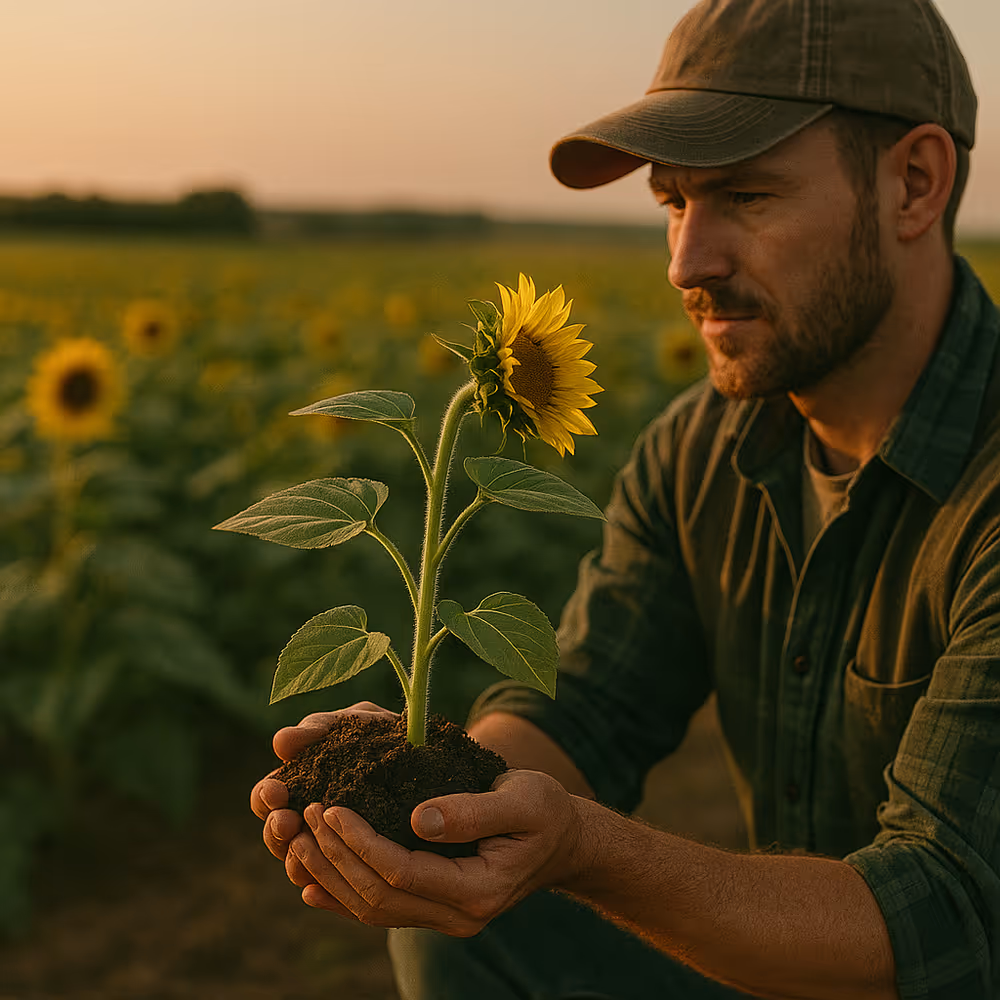
Doing “less harm” is no longer enough.
The next frontier is regeneration—restoring what centuries of extraction have broken.
- 🌾 Regenerative agriculture rebuilds soil health, stores carbon, and revitalizes rural economies.
- 🧬 Biotechnology develops biodegradable materials and carbon-absorbing microbes.
- 🤖 Artificial Intelligence tracks deforestation, forecasts weather for farmers, and optimizes renewable grids.
Technology is not the enemy; disconnection is.
When guided by ethics and empathy, innovation becomes Gaia’s ally.
The Unthinkable Alternative 🌪️
Imagine a world where Haidee grows up never hearing a bird at dawn, never seeing a glacier, never believing the sea was once blue.
That is the price of educational silence.
If we, the first generation to comprehend climate change, fail to act, the next will live not in history, but in aftermath.
The tragedy would not be ignorance but apathy.
Yet hope is still within reach.
Humanity has rebuilt after wars, cured diseases, mapped the stars.
Surely, we can choose to heal the ground beneath our feet.
A Letter to Haidee 💌
My dearest Haidee,
When you read this one day, I hope you’ll walk under trees I helped protect, breathe air kept clean by choices I made, and drink water flowing through rivers we refused to poison.
Know that your father fought not with weapons, but with words—with stories meant to awaken the guardians sleeping in every human heart.
May your generation not inherit our mistakes, but our courage to change.
Love,
Dad
A Call to Collaboration 🤝
Join me in raising a regenerative generation.
I invite:
- Educators designing climate-conscious curricula,
- NGOs and impact investors championing sustainability communication,
- Government agencies and brands seeking authentic eco-storytelling.
Let’s collaborate to build awareness campaigns, educational content, and brand narratives that move people from awareness to stewardship.
Explore my ongoing sustainability initiatives through JBN Content Consultancy:
Together, we can turn eco-literacy from curriculum objective to cultural instinct—ensuring that Haidee’s generation, and every generation after hers, inherits not despair but direction.
Epilogue — Hope Is a Verb 🌅

Hope is not passive optimism; it is action performed with faith in renewal.
Humanity’s story is not yet written in carbon.
If we teach our children to read the rivers, respect the roots, and re-imagine the future, the Earth will respond with abundance.
For Haidee, and for every child who will one day trace their name upon a world map—may that map still be green. 🌍💫
0 Comments
Leave a comment