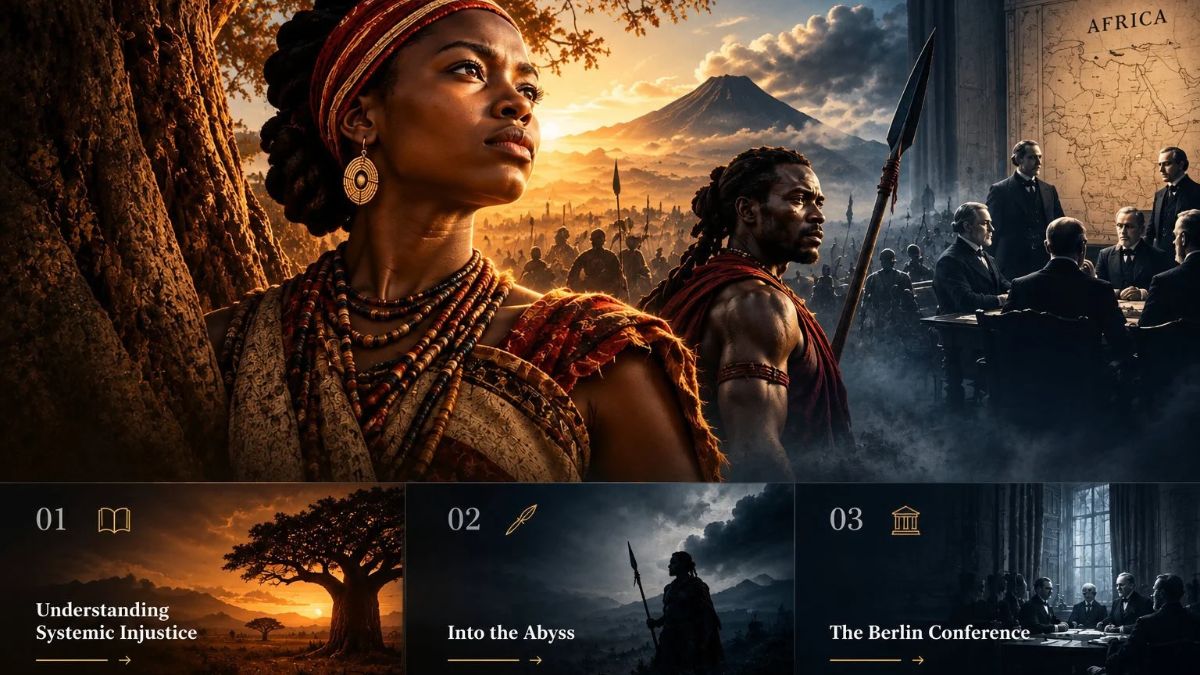
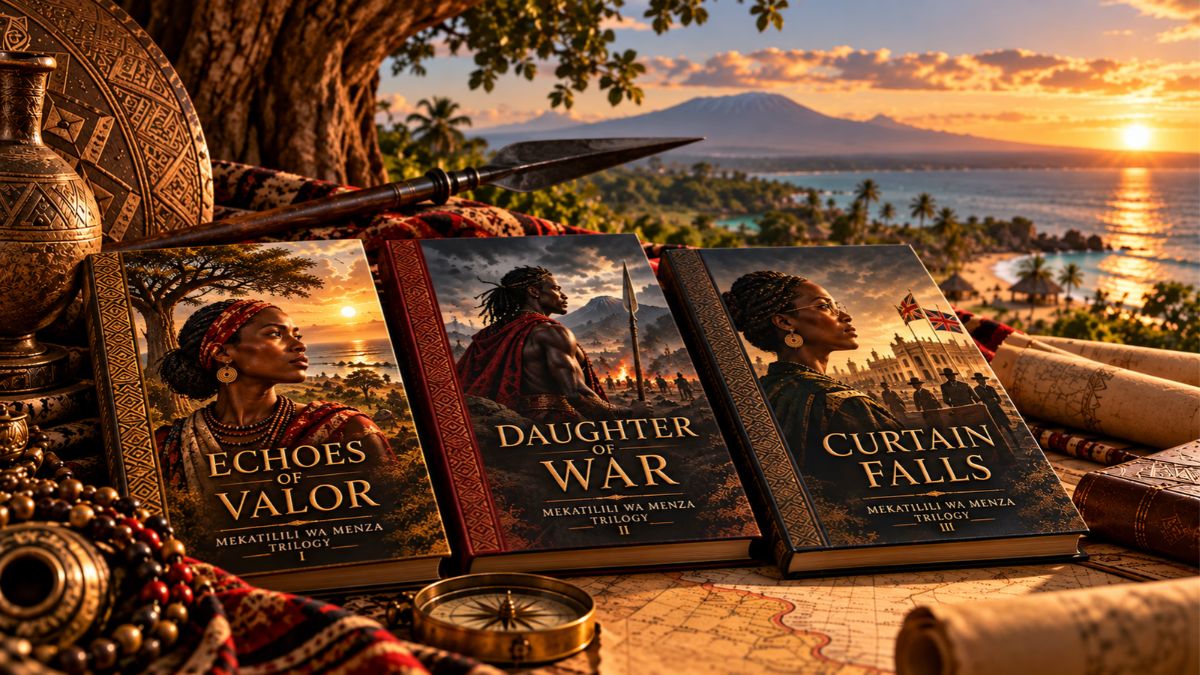
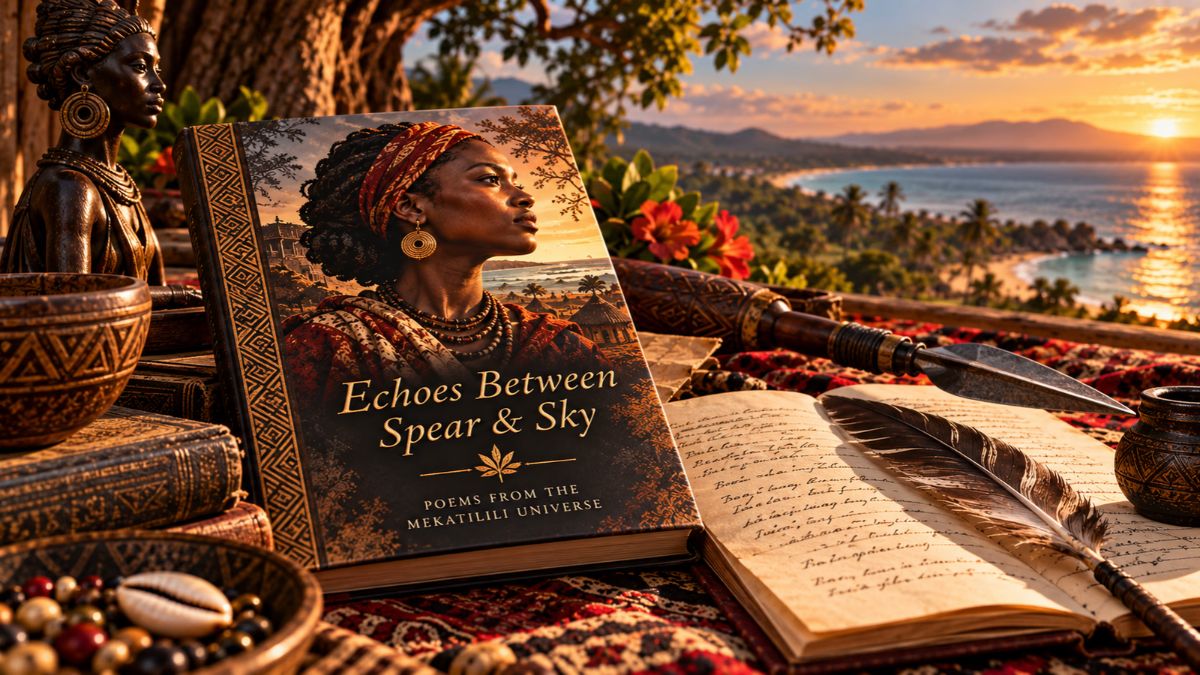
Step into Echoes of Valor, the first movement of the Mekatilili wa Menza Trilogy.
Read three curated excerpts from the novel on screen, download the reader edition in your preferred format, and discover the ideas, conflicts and historical forces gathering beneath the story.
This is not simply a preview.
It is a way into the world.
Before Mekatilili wa Menza became a name associated with resistance, there was Mnyazi—a young woman growing into questions of identity, knowledge, justice and belonging.
Echoes of Valor enters that earlier world.
Its story asks what a person must learn—and endure—before obedience ceases to be an acceptable answer.
The three excerpts that follow were chosen deliberately.
Each stands on its own, but together they trace the moral architecture of the novel: the understanding that precedes resistance, the violence that tests conviction, and the historical forces that make the coming struggle unavoidable. echoes-of-valor-excerpts.
“What must a person learn — and endure — before they decide that obedience is no longer an option?”
CURATED EXCERPTS
Three Windows Into Echoes of Valor
These are not three disconnected samples.
They are three windows into the same unfolding world.
The first asks how injustice becomes embedded in systems and ideas.
The second asks what violence does to the person who enters it.
The third widens the frame to the geopolitical decisions that will eventually reshape African lives.
Read them together, and a larger pattern begins to emerge:
Understanding. Experience. Consequence.
Understanding Systemic Injustice
How oppression is designed, not accidental
Long before resistance becomes visible, Mnyazi must first learn how injustice works.
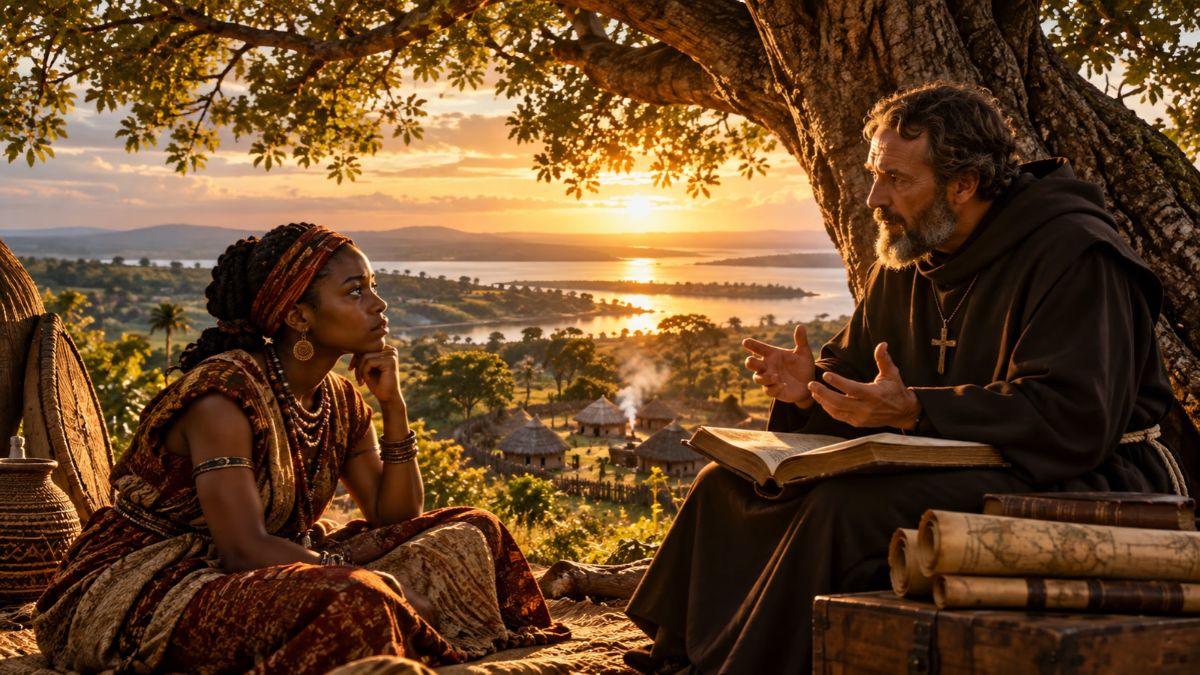
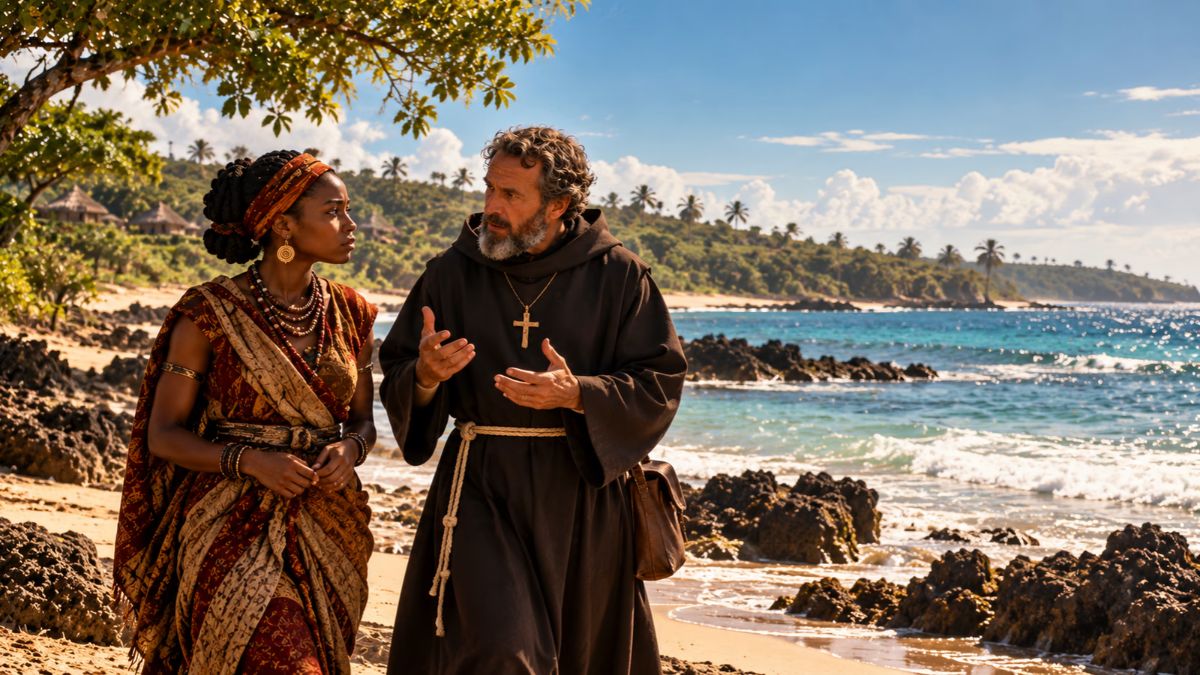
Beneath a baobab in her secluded glade near Mutsara wa Tsatsu, Friar Mark introduces her to the idea of systemic injustice—not simply as the cruelty of an individual, but as patterns and structures capable of denying people dignity, voice and opportunity.
The lesson moves through slavery, empire, conquest and religious violence before turning toward African moral philosophy and Ubuntu.
What begins as a lesson becomes something more consequential: the formation of a moral vocabulary through which Mnyazi will eventually learn to see the world around her.
This is the ethical compass of the novel.
Reading prompt:
Read slowly.
The story begins with understanding.
Into the Abyss
Where courage is tested, and innocence is lost
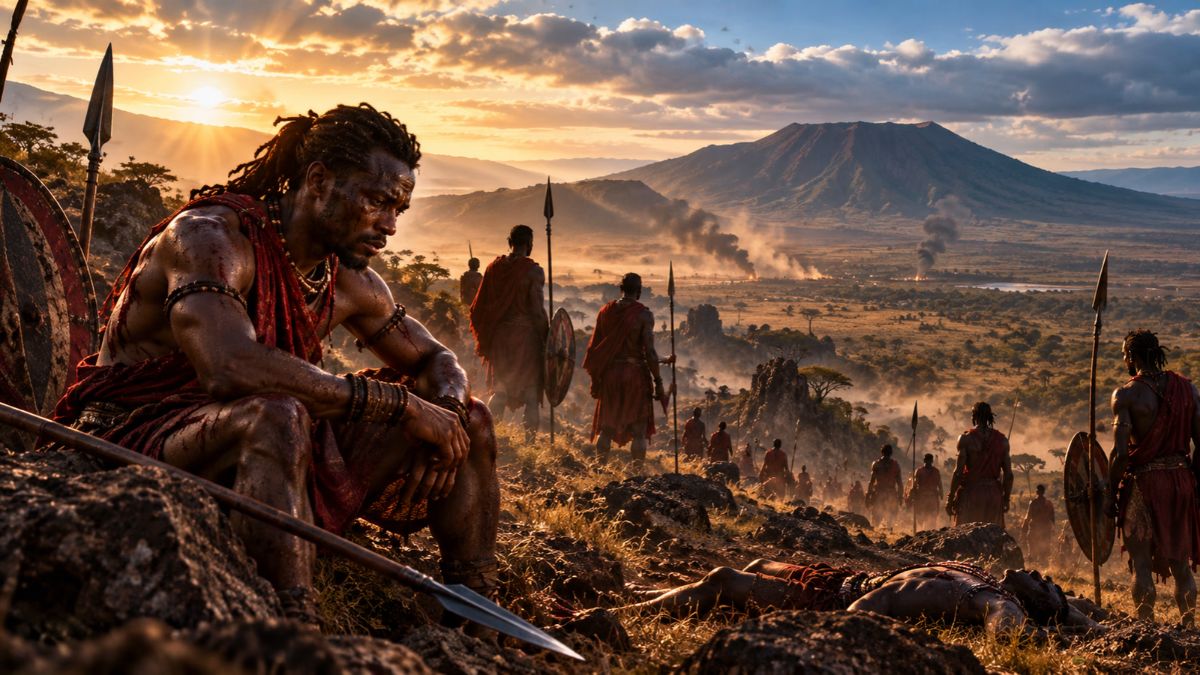
The second window takes us away from Mnyazi's philosophical awakening and into Dyeka's first encounter with the realities of violence.
What begins as a rite of passage among the Narok morans becomes a brutal confrontation near Mai Mahiu and Mt. Longonot.
Courage is tested. Blood is shed.
And the meaning of becoming a warrior becomes far more complicated than victory.
Into the Abyss does not celebrate battle.
It examines its cost.
Dyeka survives. He proves himself.
But survival does not mean emerging unchanged.
Something within him fractures, leaving behind guilt, restraint and a moral burden that will shape his place beside Mnyazi.
This is where becoming a man collides with remaining human.
Reading prompt:
Read this one for what happens after the fighting stops.
The Berlin Conference
Where destinies are decided in rooms without Africans
The final window changes scale.
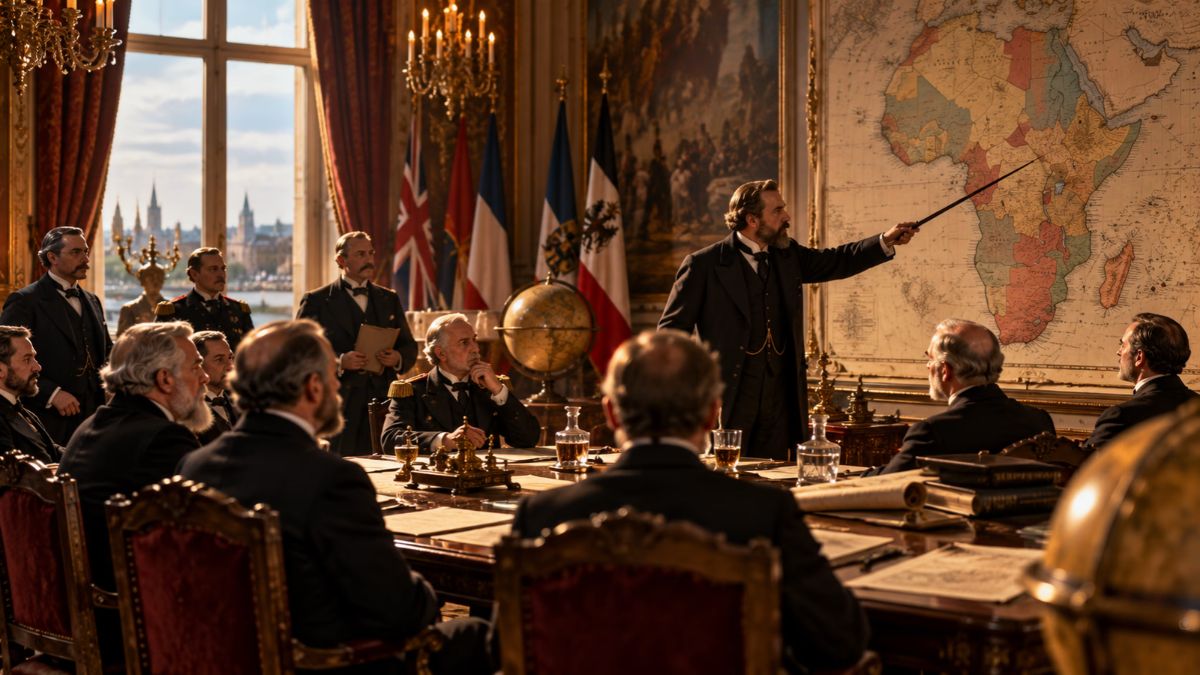
We leave the Kenyan coast and enter the halls of European power, where Africa is discussed, measured and partitioned without African representation.
The Berlin Conference of 1884–1885 becomes, in the novel, more than a distant historical event.
It becomes the moment when decisions made thousands of miles away begin casting a shadow toward Mnyazi's world.
Villages will eventually encounter those decisions through colonial administration, taxation, forced labour, displacement and war.
The people who make the decisions will never see the consequences from the ground.
History does not begin where it hurts.
It begins where it is decided.
Reading prompt:
Read this one for the long shadow behind the story.
YOUR READING EDITION
Take the Story With You
Prefer to read away from the screen?
Download the curated Echoes of Valor reader edition and continue the journey on your own device.
Choose the format that suits the way you read.
BENEATH THE NARRATIVE
What You're Entering
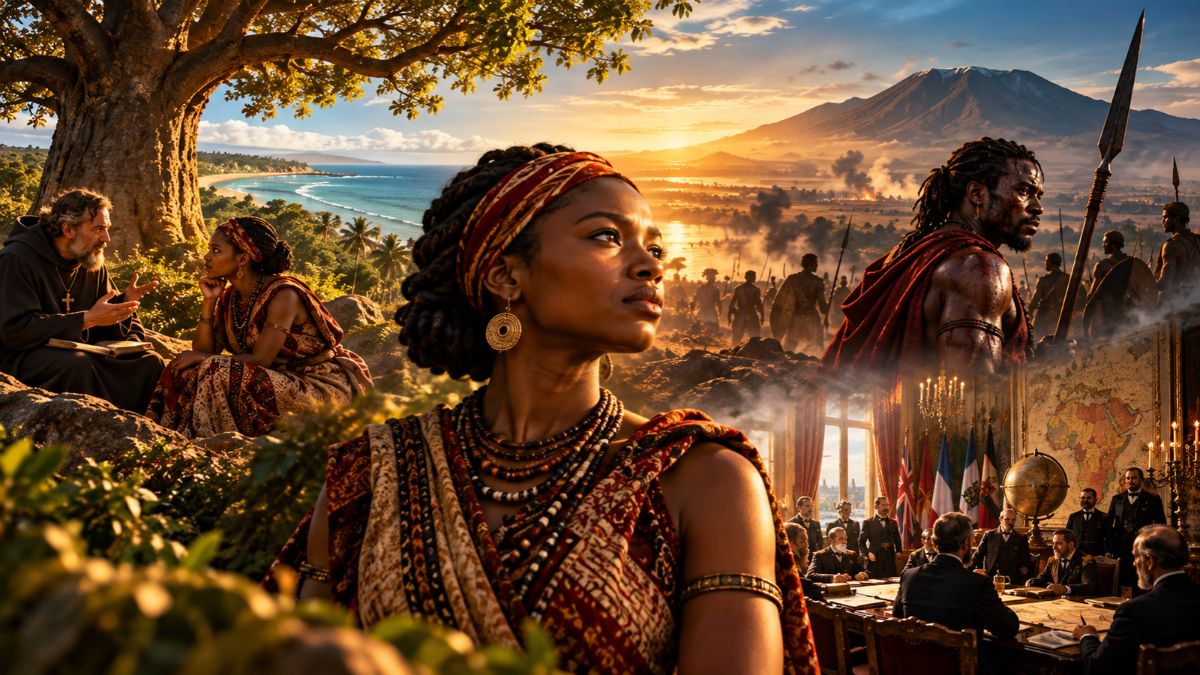
Echoes of Valor is concerned with more than the events that eventually surround Mekatilili wa Menza.
It is interested in the formation of a person before history gives that person a name.
Across its early movement, Mnyazi encounters questions of identity, justice, knowledge, faith, community and responsibility.
Dyeka encounters the realities of violence, honour and sacrifice. Around them, a larger historical world is beginning to shift.
The novel therefore moves between the intimate and the historical:
The lesson beneath the baobab,
The blood on the battlefield,
The decisions made in distant rooms.
Together, they ask how individual lives become entangled with forces much larger than themselves.
HISTORY & IMAGINATION
A Story Rooted in History
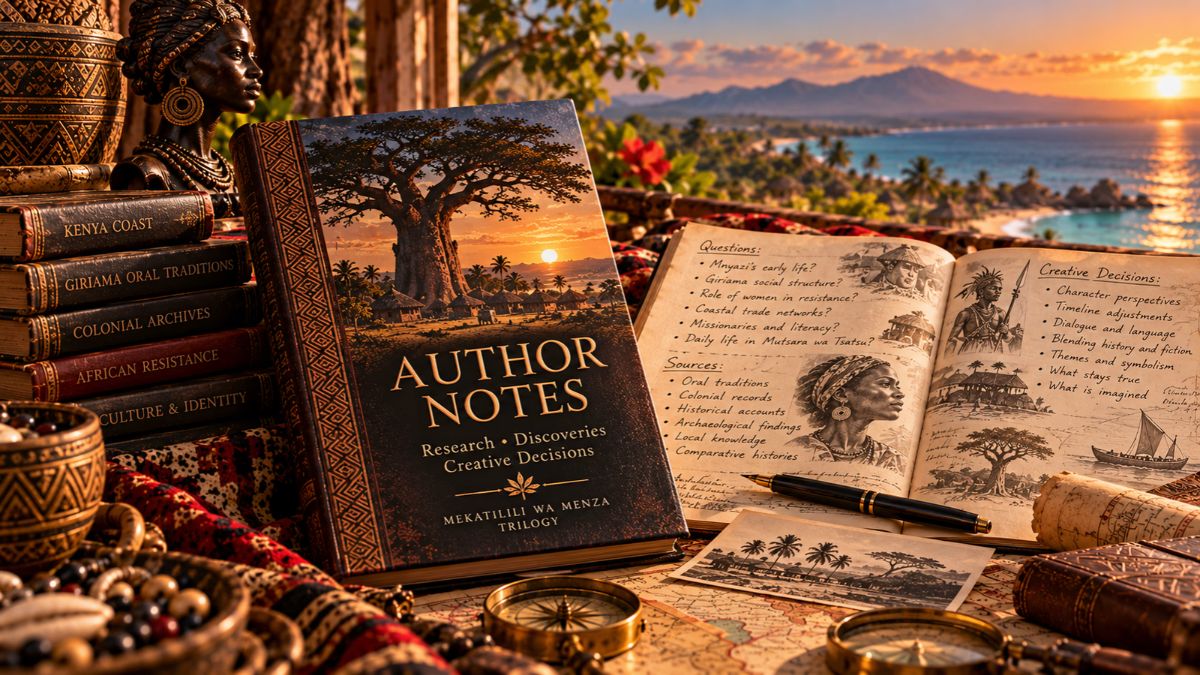
Echoes of Valor is historical fiction.
Its world draws upon historical research, cultural knowledge, oral traditions and documented events, while its characters, conversations and interior experiences are shaped through imaginative reconstruction.
That distinction matters.
The historical record does not preserve every moment of Mekatilili wa Menza's early life.
It cannot tell us every conversation she had, every question she asked, or every experience that shaped the person she would become.
Where the record speaks, the novel listens carefully.
Where the record falls silent, fiction enters—but does not pretend that imagination is evidence.
The result is a story built in the space between history, cultural memory and literary imagination.
The excerpts offer three thresholds into Echoes of Valor.
The complete novel carries the journey further.
Follow Mnyazi through the formative years before history remembers her as Mekatilili wa Menza—and discover the people, ideas, relationships and forces that begin shaping the woman she will become.
I did not want these excerpts to function simply as advertisements for a novel.
I wanted them to stand on their own as encounters with the questions that gave the story its shape.
Understanding Systemic Injustice asks us to look beneath individual acts and examine the structures that make injustice possible.
Into the Abyss asks what violence leaves behind in the person who survives it.
The Berlin Conference asks us to look beyond the battlefield—to the rooms, decisions and ambitions that can set history in motion long before their consequences reach ordinary people.
These are thresholds, not summaries.
If they leave you curious, unsettled, reflective, or wanting to understand more, then they have done what I hoped they would do.
Thank you for reading with intention.
— Brian Njenga
Mombasa, Kenya
Questions Before You Read
1) Are these excerpts from Echoes of Valor?
Yes. They are three curated passages from Echoes of Valor, the first movement of the Mekatilili wa Menza Trilogy.
2) Are these spoilers?
They are intended as thresholds into the novel rather than a synopsis of its outcomes. They introduce important ideas, characters and historical tensions without attempting to tell the complete story.
3) What do the three excerpts explore?
Understanding Systemic Injustice explores moral awakening and the structures through which injustice operates. Into the Abyss examines violence, courage and its psychological cost. The Berlin Conference widens the story to the colonial and geopolitical forces reshaping Africa.
4) Can I read the excerpts without downloading them?
Yes. The curated excerpts are available through the on-page reader. Downloading simply allows you to continue reading offline.
5) Which format should I choose?
PDF is suitable for fixed-layout reading. EPUB is recommended for most modern e-readers and reading applications. MOBI is provided for legacy Kindle-compatible workflows.
6) Who is the book for?
The excerpts are particularly suited to readers interested in African history, historical fiction, cultural memory, resistance, moral philosophy and the literary exploration of colonial history.
7) Is Echoes of Valor historical fact?
No. It is historical fiction, combining historical research and cultural knowledge with imaginative reconstruction. The novel does not present fictional dialogue or invented interior experiences as documentary evidence.
8) What comes after Echoes of Valor?
Echoes of Valor is the first movement of the planned Mekatilili wa Menza Trilogy. Daughter of War is in development, followed by Curtain Falls.