
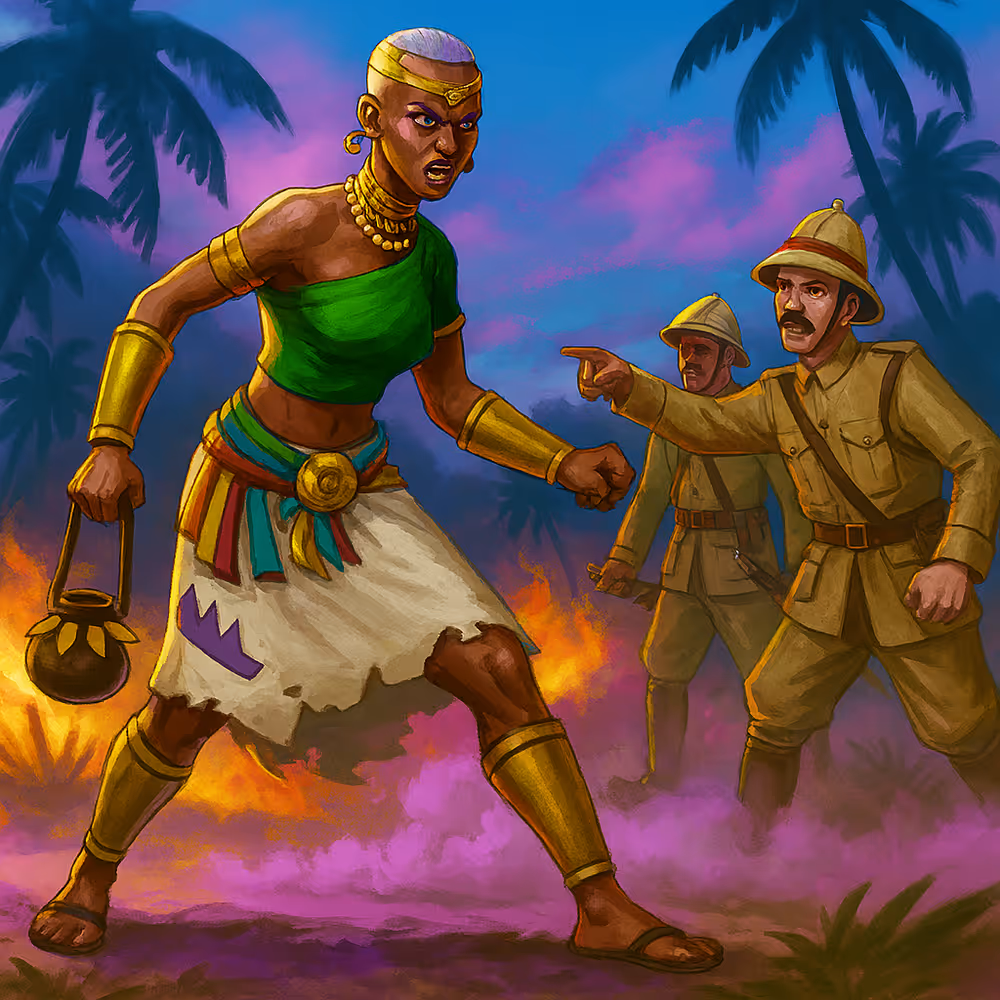
Long before history books recorded her name, before monuments rose in her honor, and before schoolchildren learned of her defiance against colonial rule, Mekatilili wa Menza belonged to a world shaped by ritual, oral tradition, and the enduring rhythms of community life.
Among those rhythms was Kifudu.
To outsiders, Kifudu may have appeared to be merely a dance.
To the Giriama people, however, it represented something far more profound.
It was grief given movement.
Memory given voice.
A communal language through which sorrow could be shared, the departed honored, and the living reminded that they did not bear their burdens alone.
In time, this sacred tradition would take on an altogether different role.
Under Mekatilili's leadership, Kifudu became more than ritual.
It became resistance.
As British colonial policies increasingly threatened Giriama autonomy through forced labor, punitive taxation, and the gradual erosion of traditional authority, Mekatilili drew upon the emotional and symbolic power of familiar cultural practices to unite her people.
The same dance that once helped communities navigate loss would become a rallying cry against oppression.
I first encountered this aspect of Mekatilili's story while researching Echoes of Valor, the opening movement of my historical fiction trilogy inspired by her life and legacy.
What captivated me wasn't simply the ingenuity of transforming ritual into resistance.
It was the deeper implication beneath it.
Before Kifudu mobilized communities against empire, it had already taught them how to survive grief together.
That idea lingered with me.
It found its way into my research notes, into conversations with fellow enthusiasts of East African history, and eventually into the pages of Echoes of Valor itself.
Because stories such as Mekatilili's deserve more than passing mention.
In revisiting the history of Kifudu and the Giriama resistance, my hope is not merely to recount historical events.
Rather, it is to explore how culture, memory, and identity can become extraordinary sources of resilience, and why these stories continue to matter today.
What Is the Kifudu Dance?
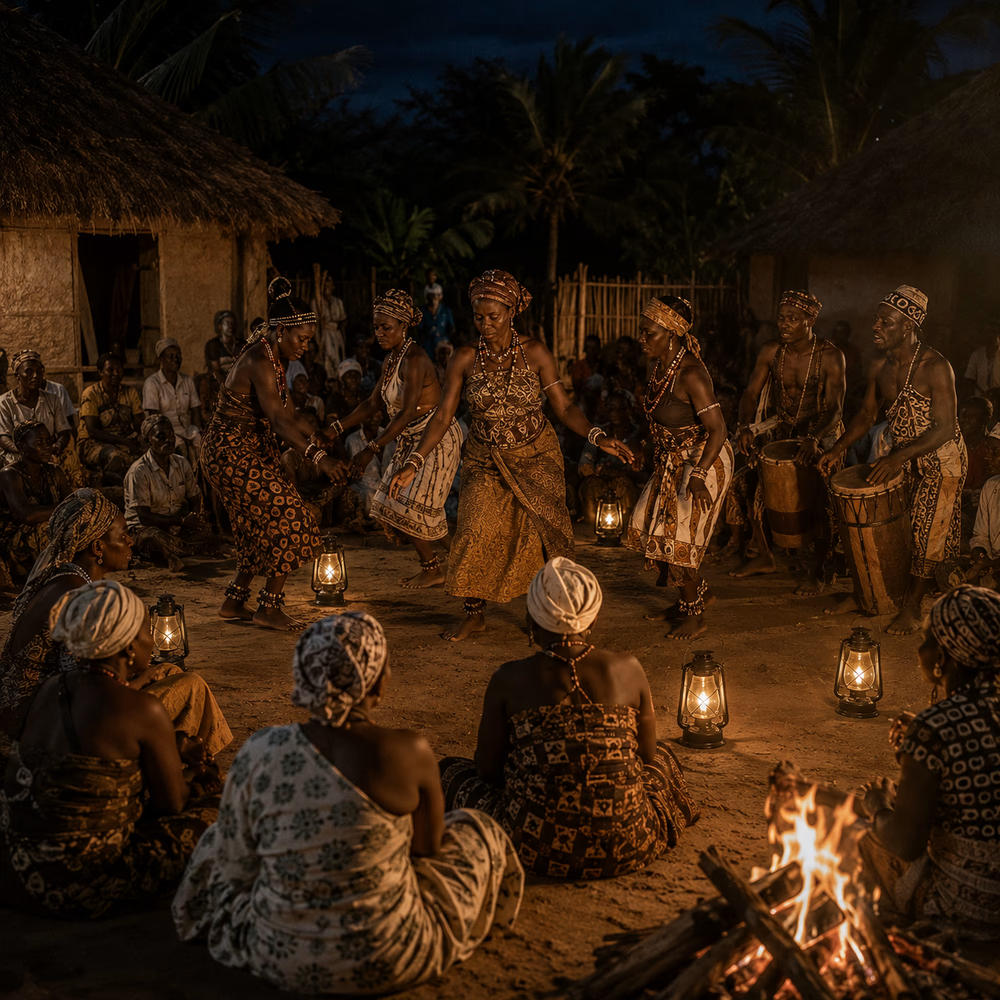
The Kifudu dance occupies a unique place within Giriama cultural traditions.
Historically associated with funeral observances and periods of communal mourning, it provided a structured way for communities to process grief while reaffirming social bonds.
Unlike celebratory dances performed during harvests or rites of passage, Kifudu emerged during moments of profound loss.
Families gathered.
Neighbors offered support.
Songs echoed through homesteads long into the night.
And through rhythmic movement and collective participation, sorrow found expression.
Although interpretations and practices likely varied across communities and generations, the dance served an essential purpose:
It reminded participants that grief was not an individual burden to be carried in isolation.
Rather, it was a shared experience woven into the fabric of communal life.
Within this context, Kifudu became both remembrance and reassurance.
Why Kifudu Was Sacred
Among many African societies, ritual performance has historically functioned as far more than entertainment.
It preserves memory.
Reinforces values.
Creates continuity between generations.
Kifudu embodied these functions.
The dance honored those who had passed beyond the visible world while affirming the responsibilities of those who remained behind.
It acknowledged pain without surrendering to despair.
In doing so, it transformed mourning into an act of solidarity.
Participants moved together.
Sang together.
Remembered together.
The ceremony reinforced an important truth:
Even in loss, community endured.
That emotional foundation would later help explain why Kifudu proved so powerful in entirely different circumstances.
When Mekatilili called upon her people to resist colonial encroachment, she invoked not an unfamiliar symbol, but one deeply embedded within collective consciousness.
Is Kifudu Still Practised Today?
Questions surrounding the contemporary practice of Kifudu invite both curiosity and caution.
Cultural traditions evolve.
Some practices fade.
Others adapt.
Many continue within communities while remaining largely absent from mainstream discourse.
What remains clear, however, is that Kifudu still occupies an important place within conversations about Giriama heritage and Kenya's broader cultural history.
Whether encountered through historical scholarship, oral testimony, community remembrance, or artistic reinterpretation, the dance continues to offer valuable insights into how societies understand grief, resilience, and belonging.
Its enduring presence within discussions of Mekatilili's resistance speaks to the remarkable ways in which cultural memory can outlast the forces that seek to suppress it.
The Giriama World Before Colonial Rule
To understand why Mekatilili's message resonated so profoundly, one must first appreciate the world her people sought to protect.
The Giriama are one of the nine Mijikenda communities inhabiting Kenya's coastal hinterland.
For generations, life revolved around networks of kinship, agricultural livelihoods, and sacred spaces known as Kaya forests.
More than physical settlements, the Kayas functioned as repositories of collective identity.
They served spiritual, political, and social purposes.
Elders deliberated within them.
Rituals reinforced communal bonds.
Ancestral wisdom found continuity through oral tradition.
These spaces represented a worldview grounded in reciprocity, responsibility, and belonging.
To threaten them was to threaten the foundations of society itself.
Oral Tradition as Historical Memory
Long before colonial administrators documented local affairs through official reports, communities along the East African coast preserved knowledge through spoken word and performance.
Stories carried genealogies.
Songs commemorated victories and tragedies.
Proverbs distilled generations of experience into memorable wisdom.
Dance embodied values difficult to capture through written records alone.
History, in this context, was not confined to archives.
It lived within people.
It unfolded through ritual.
It moved through rhythm.
Kifudu emerged from this broader tradition.
Its significance extended beyond the immediate circumstances of mourning.
By gathering communities together in moments of vulnerability, it strengthened the very networks upon which collective resilience depended.
Centuries later, historians, novelists, and poets continue to grapple with these traditions; not simply to reconstruct events, but to understand how people experienced them.
Because history is remembered not only through what happened.
It is also remembered through how it felt.
Colonial Intrusion and Growing Resistance
By the late nineteenth and early twentieth centuries, British colonial expansion increasingly disrupted established ways of life throughout the Kenyan coast.
Among the policies that generated widespread resentment were hut taxes and labor demands designed to support colonial economic interests.
Taxation compelled households to participate in unfamiliar cash economies.
Labor recruitment removed young men from their communities, often under coercive conditions.
The consequences extended beyond economics.
Families were separated.
Agricultural rhythms were disrupted.
Communal obligations became more difficult to fulfil.
For many Giriama communities, these developments represented not progress, but intrusion.
Cultural Disruption and the Erosion of Traditional Authority
Colonial governance frequently relied upon administrative structures that overlooked—or deliberately undermined—existing systems of leadership.
In doing so, it altered relationships between communities and those entrusted with safeguarding collective well-being.
The result was not merely political tension.
It was cultural dislocation.
Practices, institutions, and identities shaped over generations faced unprecedented pressures.
Resistance therefore emerged not only from material grievances, but from a desire to preserve dignity, autonomy, and continuity.
Why the Giriama Resisted
It would be tempting to interpret the Giriama resistance solely through the lens of military confrontation.
Yet such an interpretation risks overlooking its deeper significance.
At stake were fundamental questions:
Who possesses the authority to shape communal life?
Whose values determine the future?
What traditions deserve preservation?
For Mekatilili and those who rallied around her, resistance became an affirmation of identity as much as a rejection of colonial policies.
And in that struggle, familiar cultural practices—including Kifudu—would assume extraordinary importance.
Mekatilili wa Menza: The Woman Behind the Movement
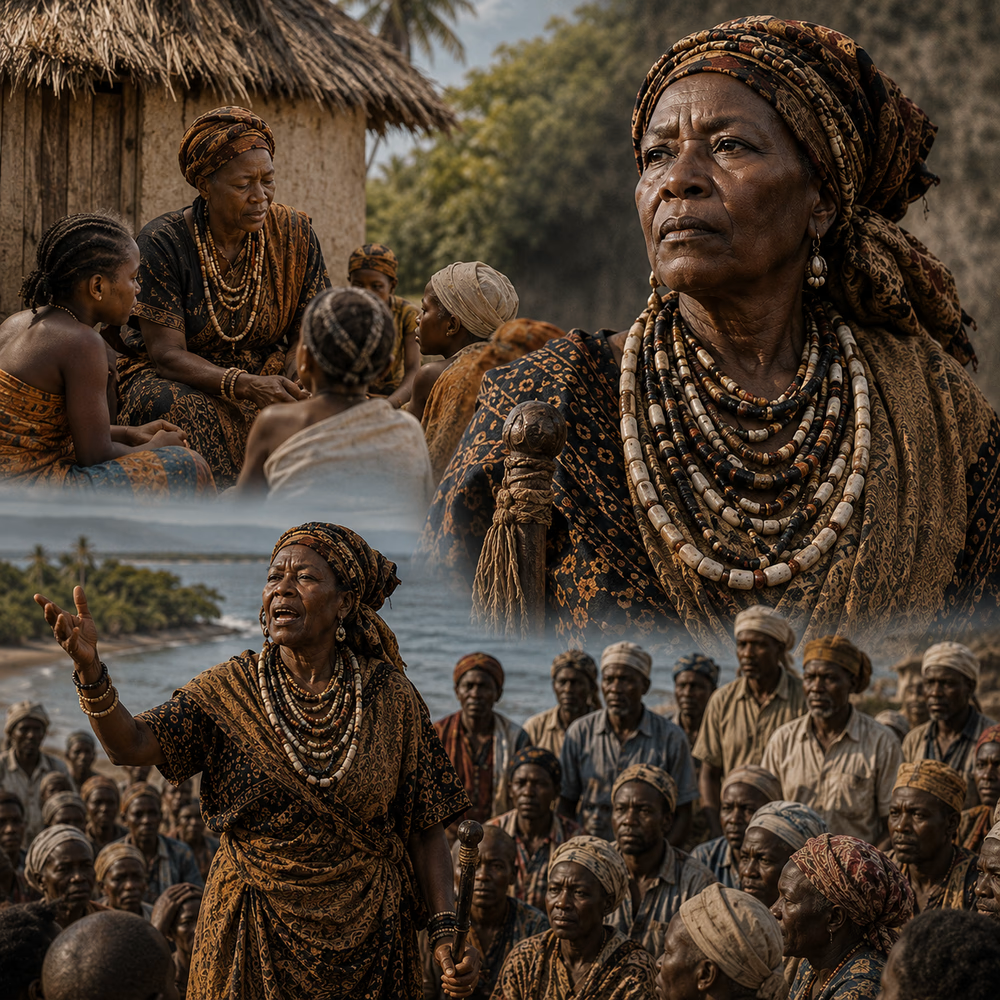
Few figures in Kenya's anti-colonial history embody resilience and courage quite like Mekatilili wa Menza.
Born in the nineteenth century among the Giriama people of present-day Kilifi County, Mekatilili came of age in a world undergoing profound change. Long-established rhythms of life along the coast increasingly collided with expanding colonial ambitions, transforming the political and social landscape around her.
Yet despite her enduring legacy, much about her early life remains obscured by the limitations of historical records.
Much of what survives has been preserved through oral traditions, local memory, and later historical scholarship.
These fragments reveal a woman of extraordinary conviction.
She was known for her eloquence.
For her fearlessness.
For her unwavering commitment to the welfare of her community.
And when circumstances demanded leadership, she answered that call though already an aged woman.
The Making of a Leader
Leadership rarely emerges in isolation.
It is often forged through hardship, shaped by lived experience, and strengthened through service to others.
Accounts of Mekatilili's life suggest that personal loss profoundly influenced her worldview.
Some historians have noted that the loss of close family members—including experiences connected to the slave trade—may have heightened her sensitivity to injustice and exploitation.
Whether interpreted through historical records or oral memory, these experiences appear to have deepened her understanding of suffering and communal responsibility.
She possessed another gift as well:
The ability to move people through words.
At a time when literacy remained limited and formal political institutions excluded African voices, oratory became a powerful instrument of leadership.
Mekatilili understood this.
She spoke in ways that resonated with everyday experiences.
She drew upon familiar symbols.
She framed resistance not as rebellion for its own sake, but as an obligation to future generations.
Why Her Message Resonated
By the early twentieth century, many Giriama communities found themselves navigating mounting pressures.
- Taxes strained already vulnerable households
- Labor demands separated families
- Traditional structures of authority faced increasing marginalization
Amid uncertainty and fear, Mekatilili offered clarity.
Her message was neither abstract nor inaccessible.
It spoke directly to questions people already carried within themselves:
Who will protect our children?
What happens if we surrender our traditions?
How do we honor those who came before us?
Through these concerns, resistance ceased to be merely political.
It became deeply personal.
And because Mekatilili rooted her message in shared values and collective memory, people listened.
How Mekatilili Turned Kifudu Into Resistance
Perhaps one of the most remarkable aspects of Mekatilili's leadership was her ability to transform familiar cultural practices into instruments of collective action.
Among these practices was Kifudu.
Traditionally associated with mourning and remembrance, Kifudu already occupied an important place within Giriama social life.
People understood its rhythms.
Its symbolism.
Its emotional weight.
Mekatilili recognized that this familiarity held tremendous power.
She used the kifudu dance to symbolize how the Giriama were spiritually dying from land dispossession and cultural erosion.
Rather than introducing entirely new forms of organization, she drew upon traditions that already commanded communal respect.
The same ritual that gathered people in moments of grief could also gather them in moments of crisis.
Kifudu became a language through which resistance could be expressed.
A reminder that communities facing profound disruption did not stand alone.
Why Kifudu Worked
Successful movements often emerge from symbols people recognize.
Kifudu offered precisely that.
It transcended individual households.
It invited participation.
It evoked shared histories and obligations.
By incorporating elements of performance, song, and collective experience, Mekatilili fostered emotional connections that abstract political arguments alone may never have achieved.
Resistance became tangible.
Immediate.
Human.
People were no longer simply responding to policies.
They were defending ways of life.
The Emotional Power of Shared Grief
Grief possesses a paradoxical quality.
It reveals vulnerability.
Yet it can also generate extraordinary solidarity.
Long before Kifudu entered the political sphere, it taught communities how to navigate loss together.
Mourning became collective.
Pain became witnessed.
Isolation gave way to companionship.
In this sense, Mekatilili's use of Kifudu reflected profound social intelligence.
She understood that resistance required more than anger.
It required belonging.
The emotional bonds strengthened through ritual could sustain courage when fear threatened to overwhelm it.
And perhaps this is why Kifudu continues to resonate today.
It reminds us that some of humanity's greatest acts of resilience emerge not despite vulnerability, but because communities choose to face vulnerability together.
Oaths, Gatherings, and Defiance
Historical accounts describe gatherings at sacred sites such as Kaya Fungo, where participants reportedly took oaths affirming their commitment to resist colonial policies.
These ceremonies reinforced solidarity.
They clarified purpose.
And they transformed private frustrations into collective resolve.
Under Mekatilili's leadership, resistance ceased to be fragmented.
Communities found common cause.
Shared rituals strengthened mutual trust.
In these moments, culture itself became political action.
The Hen, the Chick, and the Slap Heard Across the Coast
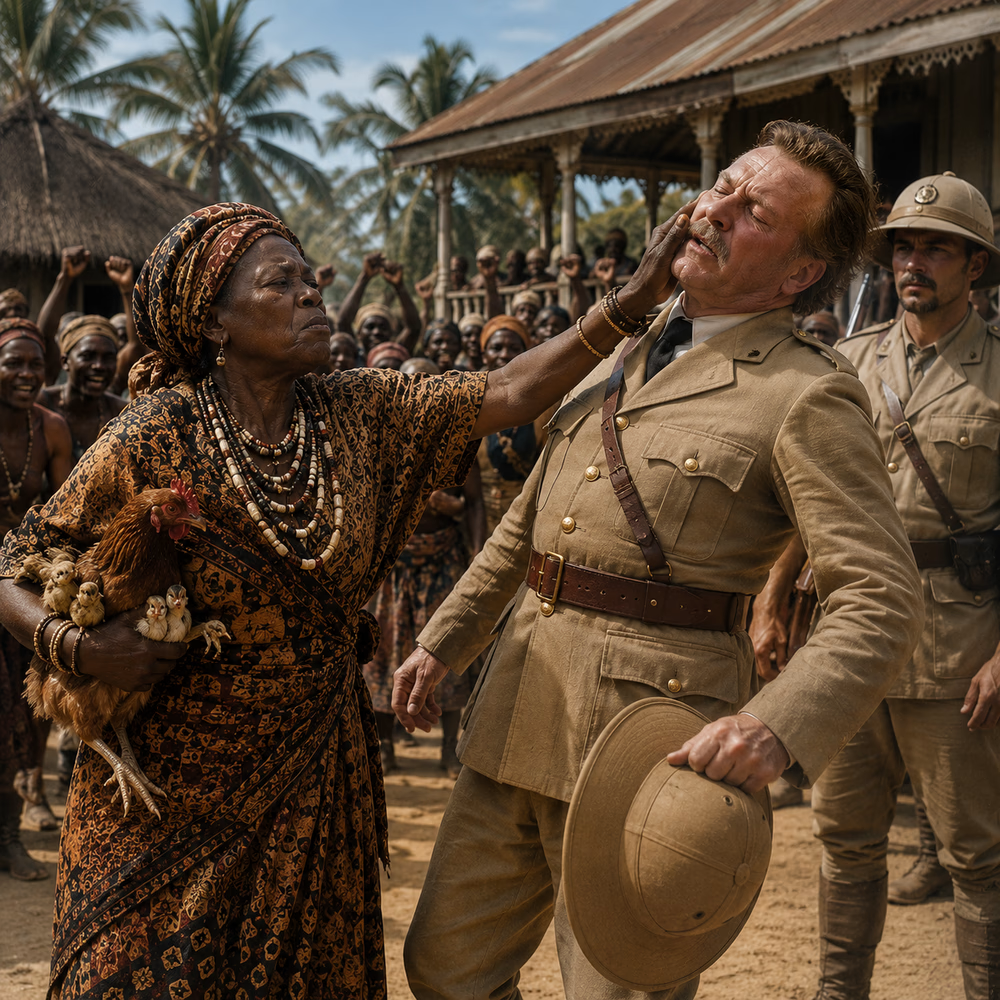
Among the most enduring legends associated with Mekatilili involves a confrontation with British colonial administrator Arthur Champion at Chakama.
On August 13, 1913, Mekatilili dramatically stormed a British meeting carrying a hen and its chicks.
Addressing the crowd, she posed a simple question:
If someone attempted to take a chick away from its mother, would the hen remain passive?
The answer was obvious.
The hen would fight.
It would defend its young.
Mekatilili then drew the comparison explicitly.
How, she asked, could parents stand idly by while colonial authorities removed their sons from their communities through forced labor recruitment?
The symbolism resonated deeply.
Motherhood became metaphor.
Protection became duty.
Resistance became necessity.
Some versions of the story go even further, describing Mekatilili challenging Arthur Champion to snatch a chick from the mother-hen. Allegedly, Champion did so and was dreadfully pecked.
Mekatilili immediately mocked him plainly:
“This is what you will get if you try to take one of our sons.”
Furious and humiliated, Champion ordered one of his guards to shoot the hen, which resulted with Mekatilili slapping him.
Whether interpreted as literal fact or symbolic embellishment, the tale has endured because it captures something essential about Mekatilili's reputation.
She refused to be intimidated.
And in doing so, she challenged assumptions about gender, authority, and power.
Arrest, Exile, and Return
Colonial authorities eventually recognized the threat posed by Mekatilili's influence.
Unable to ignore her growing support among the Giriama, they moved to neutralize her leadership.
Mekatilili and her associate, Wanje wa Mwandori, were arrested and exiled to Kisii, in western Kenya.
The intention was clear.
Separated from their communities, they would presumably lose their capacity to mobilize resistance.
Yet history rarely unfolds according to the expectations of those who seek to control it.
The Legendary Journey Home
Accounts of what happened next have entered the realm of legend.
Determined to return to her people, Mekatilili reportedly escaped exile and undertook the arduous journey back to the coast on foot.
Covering hundreds of kilometres across unfamiliar terrain, she eventually found her way home.
Whether every detail survives intact is, in some respects, secondary.
The story endures because it reflects how communities remembered her:
As someone unwilling to surrender.
As someone who persisted even when circumstances appeared insurmountable.
As someone whose commitment to her people transcended personal hardship.
Kismayu and Continued Defiance
Colonial authorities later deported Mekatilili again, this time to Kismayu in present-day Somalia.
Even so, the ideas she had helped cultivate continued to circulate.
Resistance movements rarely depend upon a single individual.
Their strength lies in the communities that carry them forward.
Although colonial repression eventually subdued the Giriama uprising, Mekatilili's example continued to inspire subsequent generations.
Her story survived.
And through its survival, so too did the values she sought to defend.
Why Kifudu Still Matters Today
In a rapidly changing world, traditions often face pressures ranging from urbanization to globalization.
Remembering practices such as Kifudu reminds us that culture is not static.
- It evolves
- Adapts
- Endures
Preservation does not necessarily require rigid replication.
It requires recognition.
Respect.
And a willingness to engage thoughtfully with the knowledge inherited from those who came before us.
Women's Leadership
For far too long, histories of resistance have privileged certain voices while overlooking others.
Mekatilili challenges these omissions.
She demonstrates that women have always occupied central roles within struggles for justice, dignity, and self-determination.
Her leadership expanded contemporary understandings of who could speak, organize, and inspire collective action.
Her example remains relevant precisely because conversations about representation and inclusion continue today.
Indigenous Knowledge and Resistance
Kifudu illustrates that communities often possess their own sophisticated strategies for responding to adversity.
Resistance need not conform to externally imposed models to be effective.
- Songs
- Stories
- Ceremonies
- Rituals
These too can become vehicles for preserving identity and asserting agency.
Understanding this expands our appreciation of what political action can look like.
Remembering Beyond Monuments
Statues and commemorative plaques have their place.
Yet remembrance also occurs through storytelling.
Through scholarship.
Through artistic interpretation.
Through the conversations we choose to sustain.
Each retelling of Mekatilili's story becomes an act of preservation.
A refusal to allow remarkable lives to slip quietly into obscurity.
And perhaps this is Kifudu's enduring lesson.
The dance was never only about grief.
Nor was it solely about resistance.
At its heart, it was about continuity.
About ensuring that even amid upheaval, communities remembered who they were.
And who they aspired to remain.
✍️ From History to Fiction: Why I Wrote Echoes of Valor
The deeper I ventured into Mekatilili wa Menza's story, the more I found myself grappling with a recurring frustration familiar to many historical fiction writers:
There were silences.
The historical record offered glimpses of Mekatilili's extraordinary leadership, yet vast stretches of her life remained obscured.
- Who had she been before history remembered her as a rebel?
- What experiences shaped her understanding of courage, grief, and responsibility?
- What relationships sustained her?
- What losses transformed her?
As a novelist, I became increasingly drawn to these questions.
Historical fiction cannot replace scholarship.
Nor should it attempt to do so.
What it can do, however, is bridge the emotional distance that often separates contemporary readers from the people who inhabited the past.
It allows us to imagine.
To empathize.
To inhabit uncertainty.
Echoes of Valor emerged from this desire.
It reimagines the formative years of the girl who would one day become Mekatilili wa Menza, exploring themes of friendship, identity, sacrifice, and resilience against the backdrop of nineteenth-century coastal Kenya.
In many ways, writing the novel became an act of listening.
Listening to fragments preserved through oral traditions.
Listening to the landscapes of the Kenyan coast.
Listening to the questions history leaves unanswered.
And among those questions, one lingered more persistently than the rest:
What might Kifudu have meant to a young Mnyazi before it became synonymous with resistance?
How Kifudu Inspired Echoes of Valor: Mnyazi's First Dance
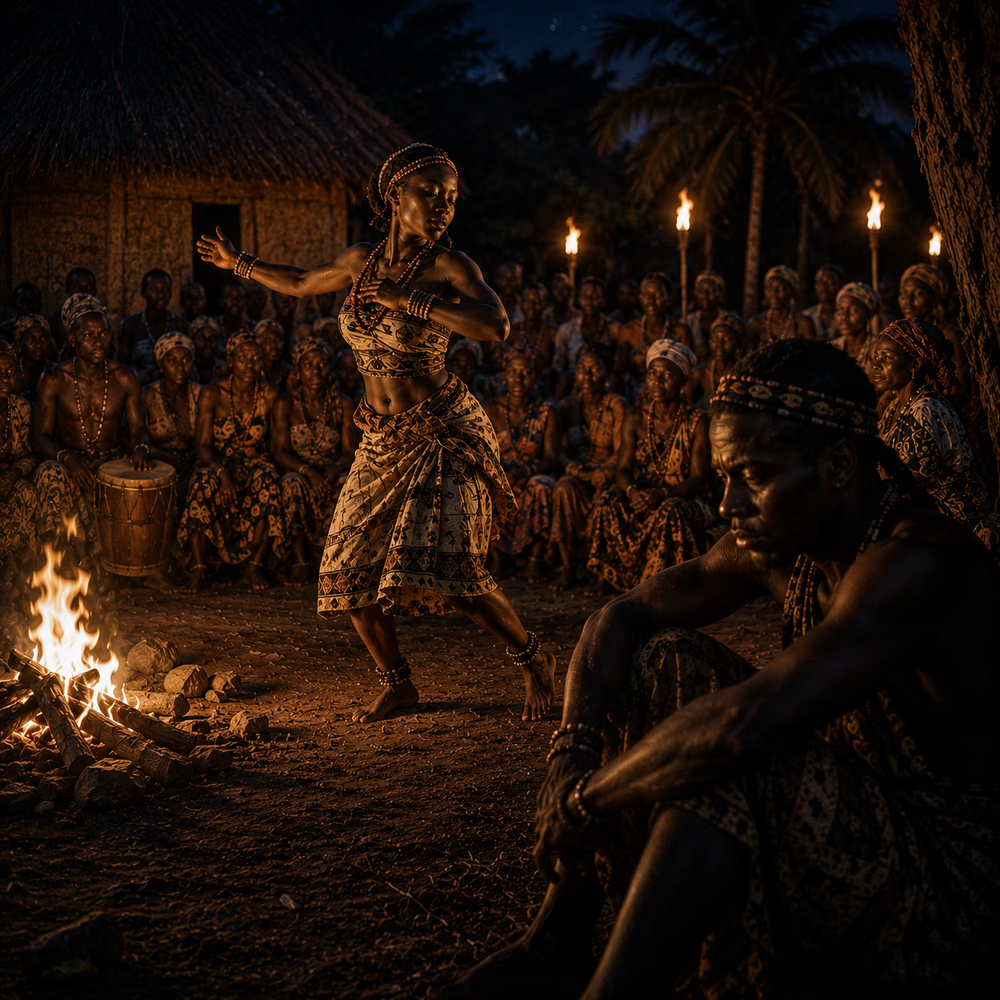
One of the most poignant scenes in Echoes of Valor unfolds during a vigil held at Mutsara wa Tsatsu following the capture of Mwarandu—Mnyazi's beloved brother—by Arab slavers.
The scene is narrated through the perspective of Dyeka wa Duka, Mwarandu's closest friend and Mnyazi's future husband.
Consumed by guilt for surviving the ambush that claimed Mwarandu's freedom, Dyeka retreats into the shadows of the vigil, unable to reconcile his grief with his perceived failure.
Then Mnyazi steps forward.
And Kifudu begins.
Until that moment, Kifudu has existed within the narrative primarily as communal ritual.
An inherited language of mourning.
Yet as Mnyazi dances, something shifts.
The ceremony transcends grief.
It becomes affirmation.
It becomes courage.
It becomes the first glimpse of the extraordinary leader she may one day become.
As the drums pulse through the night and villagers gather beneath the watchful glow of firelight, Dyeka witnesses not merely a performance, but transformation.
The girl he once knew reveals unexpected strength.
Her voice carries conviction.
Her movements embody solidarity.
Her presence reminds those gathered that even amid devastating loss, community endures.
A single refrain captures this spirit:
"With courage and with unity, our bonds will never sway..."
For Dyeka, the moment becomes catalytic.
If Mnyazi can transform grief into resolve, perhaps he too can become something greater than the fear and shame that haunt him.
Inspired by what he witnesses, Dyeka vows to leave Mutsara wa Tsatsu and undertake a journey of self-imposed exile.
He resolves to return only when he has become worthy of protecting those he loves.
For Mnyazi, the dance marks the earliest stirrings of leadership.
For Dyeka, it becomes the beginning of transformation.
And for the village, it demonstrates the enduring power of communal resilience.
Years later, the historical Mekatilili would draw upon Kifudu's emotional and symbolic power to mobilize resistance against colonial intrusion.
In imagining this fictional scene, I found myself returning to a single conviction:
Before Kifudu rallied communities against empire, it first taught them how to endure loss together.
Why Historical Fiction Matters
Historical fiction occupies a unique space between scholarship and imagination.
At its best, it encourages readers to engage more deeply with the past.
It invites empathy.
It reminds us that historical figures were once ordinary people navigating extraordinary circumstances.
Importantly, historical fiction can also illuminate overlooked narratives.
Stories that have long remained peripheral within dominant historical discourse.
Stories that challenge assumptions.
Stories that expand our understanding of who shaped history.
For me, writing Echoes of Valor became an opportunity not only to honor Mekatilili's legacy, but also to celebrate the richness of Kenya's cultural heritage.
Because remembering is itself a form of resistance.
And stories, when thoughtfully crafted, can help preserve what might otherwise be forgotten.
Curious About Mnyazi's Journey?
Echoes of Valor follows the formative years of the girl who would one day become Mekatilili wa Menza.
Inspired by historical research and cultural reflection, the novel explores friendship, sacrifice, identity, and resilience in nineteenth-century coastal Kenya.
When Prose Wasn't Enough: Why Echoes Between Spear & Sky Exists
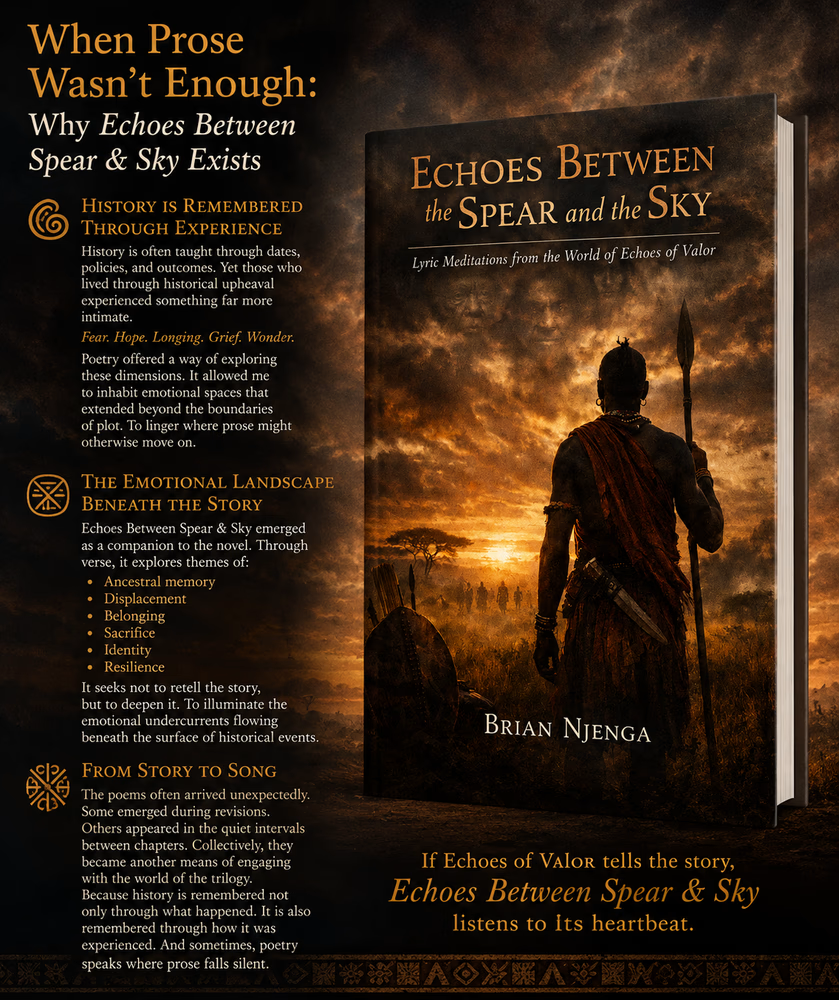
While writing Echoes of Valor, I discovered that certain experiences resisted conventional narrative form.
Prose could describe events.
It could reconstruct settings.
It could chart character development.
Yet some emotional truths demanded another language.
One rooted in rhythm.
In imagery.
In invocation.
Poetry became that language.
History Is Remembered Through Experience
History is often taught through dates, policies, and outcomes.
Yet those who lived through historical upheaval experienced something far more intimate.
- Fear
- Hope
- Longing
- Grief
- Wonder
Poetry offered a way of exploring these dimensions.
It allowed me to inhabit emotional spaces that extended beyond the boundaries of plot.
To linger where prose might otherwise move on.
The Emotional Landscape Beneath the Story
Echoes Between Spear & Sky emerged as a companion to the novel.
Through verse, it explores themes of:
- Ancestral memory
- Displacement
- Belonging
- Sacrifice
- Identity
- Resilience
It seeks not to retell the story, but to deepen it.
To illuminate the emotional undercurrents flowing beneath the surface of historical events.
From Story to Song
The poems often arrived unexpectedly.
Some emerged during revisions.
Others appeared in the quiet intervals between chapters.
Collectively, they became another means of engaging with the world of the trilogy.
Because history is remembered not only through what happened.
It is also remembered through how it was experienced.
And sometimes, poetry speaks where prose falls silent.
If Echoes of Valor tells the story, Echoes Between Spear & Sky listens to its heartbeat.
→ Explore Echoes Between Spear & Sky
→ Read: "From Story to Song: Why Echoes Between Spear & Sky Became a Necessary Journey"
Final Reflections: Remember the Dance
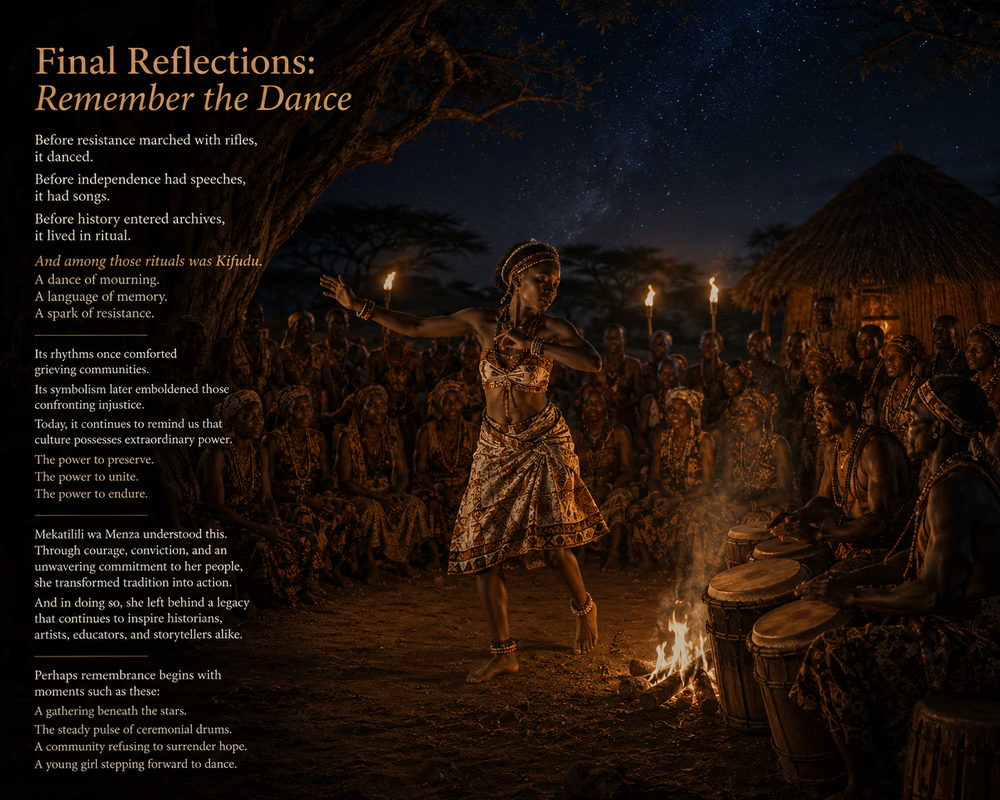
Before resistance marched with rifles, it danced.
Before independence had speeches, it had songs.
Before history entered archives, it lived in ritual.
And among those rituals was Kifudu.
A dance of mourning.
A language of memory.
A spark of resistance.
Its rhythms once comforted grieving communities.
Its symbolism later emboldened those confronting injustice.
Today, it continues to remind us that culture possesses extraordinary power.
The power to preserve.
The power to unite.
The power to endure.
Mekatilili wa Menza understood this.
Through courage, conviction, and an unwavering commitment to her people, she transformed tradition into action.
And in doing so, she left behind a legacy that continues to inspire historians, artists, educators, and storytellers alike.
Perhaps remembrance begins with moments such as these:
A gathering beneath the stars.
The steady pulse of ceremonial drums.
A community refusing to surrender hope.
A young girl stepping forward to dance.
Choose Your Path Into Mekatilili's World

📖 Through Fiction
Echoes of Valor
Journey into nineteenth-century coastal Kenya through a richly researched historical novel inspired by the life and legacy of Mekatilili wa Menza.
✍️ Through Poetry
Echoes Between Spear & Sky
Explore the emotional and spiritual dimensions of the trilogy through poetry shaped by themes of memory, identity, and resilience.
🏺 Through History
Author Notes
Discover the research, reflections, and historical inspirations that shaped the Mekatilili trilogy.
0 Comments
Leave a comment