
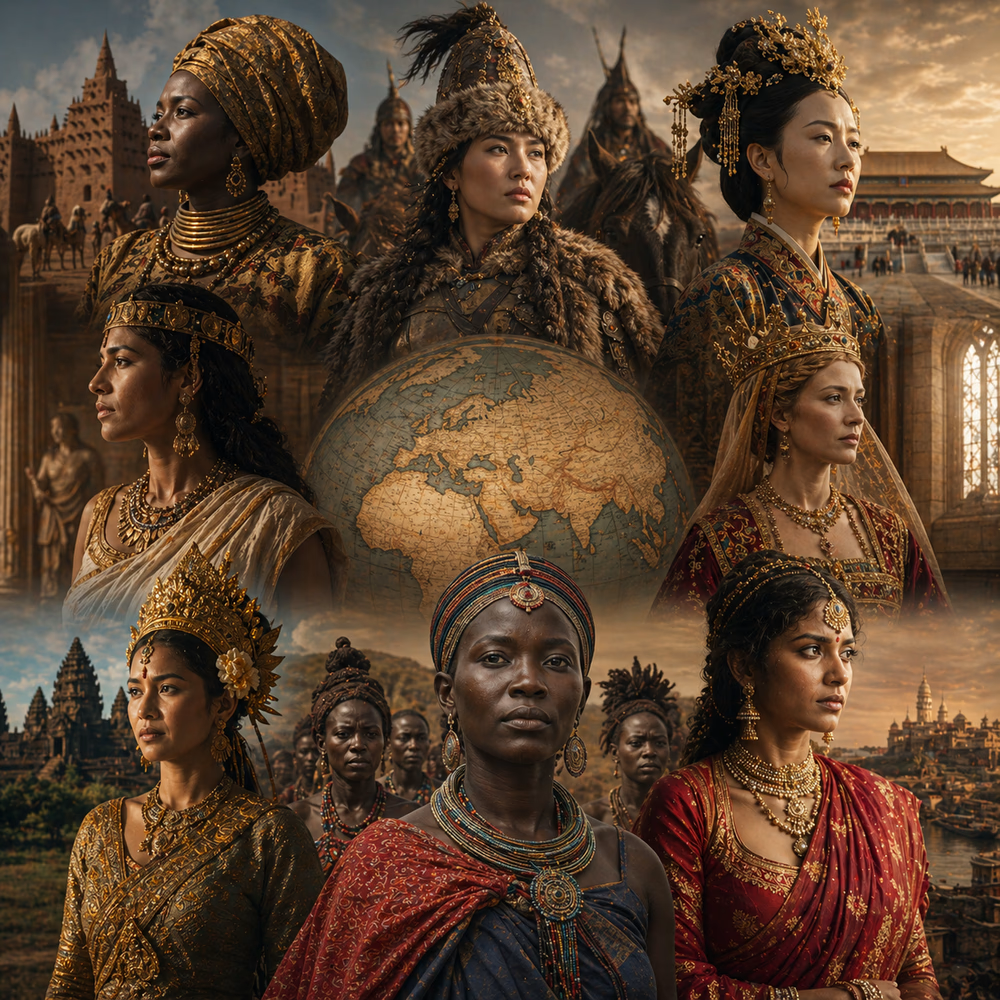
History has long treated powerful women as anomalies: isolated figures who rose briefly against the grain of their societies.
Yet when we widen the lens across continents and centuries, a different pattern emerges.
From the Eurasian steppe to West Africa, from ancient China to medieval Europe and Southeast Asia, women did not simply appear in moments of crisis, they were often already embedded within the very structures that governed power.
The question, then, is not whether women led.
It is how their societies enabled—or constrained—their leadership.
In writing the Mekatilili wa Menza Trilogy, I have come to see her not as a singular phenomenon, but as part of a broader global continuum—one where female authority takes multiple forms: institutional, dynastic, charismatic, maternal, and even legendary.
Institutional Female Power in Historical Societies 🏛️
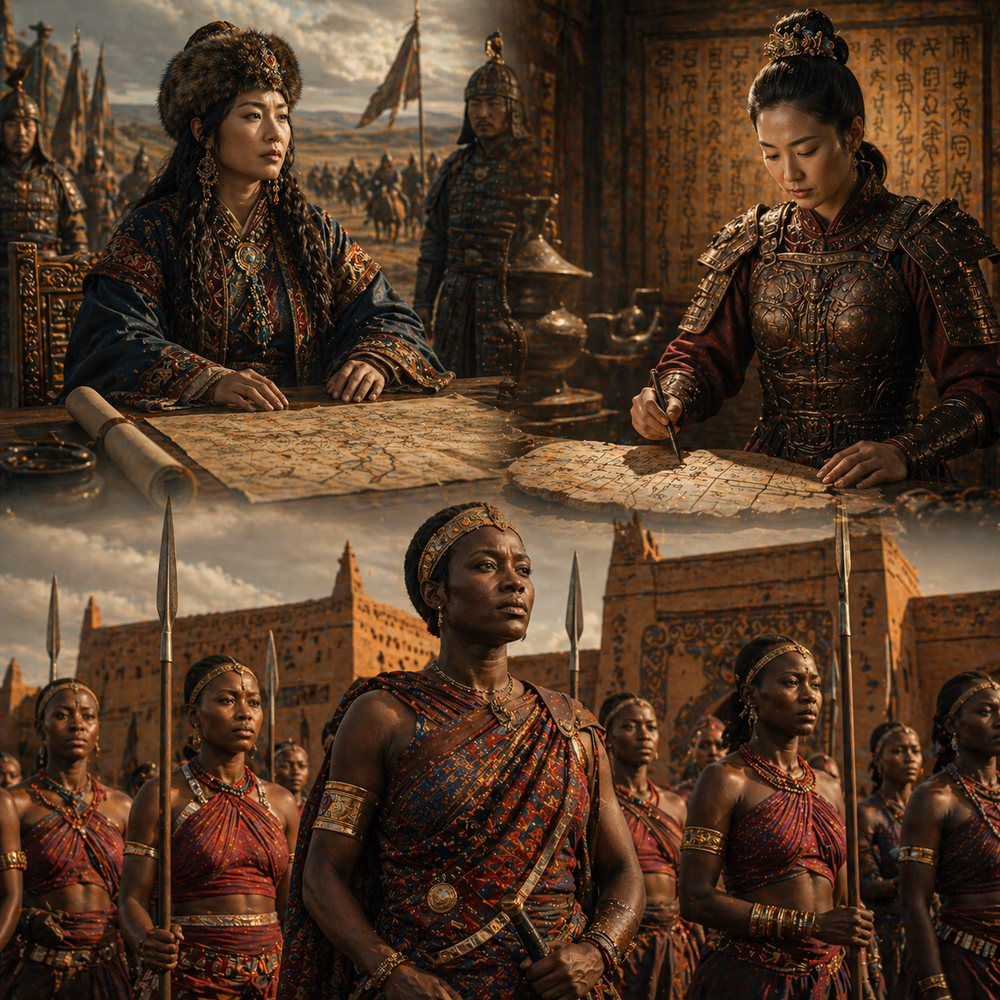
In some societies, female authority was not exceptional.
It was structural.
Consider Alakhai Bekhi, a daughter of Genghis Khan, who governed frontier territories and suppressed rebellion with the same authority as any male counterpart.
Or Fu Hao, a general of the Shang dynasty, whose military campaigns are preserved in oracle bone inscriptions.
In West Africa, the Agojie of the Kingdom of Dahomey formed a standing corps of professional female soldier: an institutional reality that unsettled European observers centuries later.
These women did not have to justify their presence.
Their societies already recognized their legitimacy.
Here, power was:
- Visible
- Functional
- Expected
Mekatilili’s authority, though expressed through spiritual and communal channels, echoes this model.
She acts not as an outsider to power, but as one of its recognized custodians.
Dynastic and Constitutional Female Leadership 👑
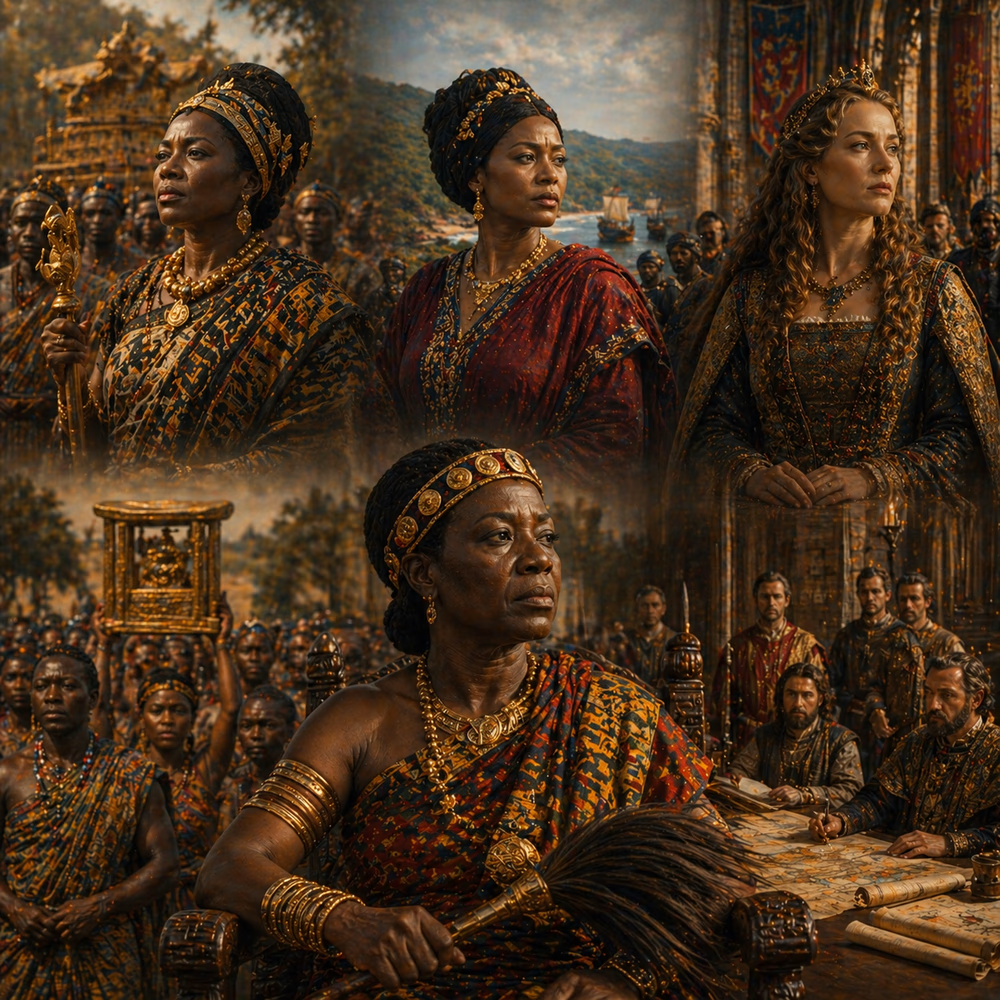
Other societies rooted female authority in lineage and governance.
Yaa Asantewaa, Queen Mother of the Asante, led war not as a rebel, but as a constitutional authority defending the Golden Stool—the spiritual core of her people.
Nzinga Mbande navigated diplomacy and warfare with equal mastery, sustaining sovereignty under relentless Portuguese pressure.
In Europe, Eleanor of Aquitaine wielded immense influence across two kingdoms, though always within the constraints of feudal and ecclesiastical systems.
The contrast is telling:
- n African contexts, legitimacy often flowed through matrilineal or dual-gender systems
- In Europe, authority was negotiated within male-dominated frameworks
Yet across both, women acted as guardians of continuity.
Mekatilili, too, stands within this lineage, not as a ruler by title, but as a defender of cultural legitimacy.
Charismatic Female Power in Times of Crisis 🔥

Some figures do not inherit power. They ignite it.
Joan of Arc emerged from obscurity to alter the trajectory of the Hundred Years’ War, her authority rooted in conviction and spiritual vision.
Similarly, Mekatilili wa Menza mobilized the Giriama through ritual, oath, and ancestral invocation, transforming belief into resistance.
These figures arise when:
- Existing systems falter
- Communities face existential threat
- Moral clarity becomes more compelling than hierarchy
Their power is potent, but often fragile.
In the Mekatilili Trilogy:
- Echoes of Valor traces this awakening
- Daughter of War explores its consolidation
- Curtain Falls will reckon with its cost
The Maternal Axis: Hidden Foundations of Power 👩🏾👦
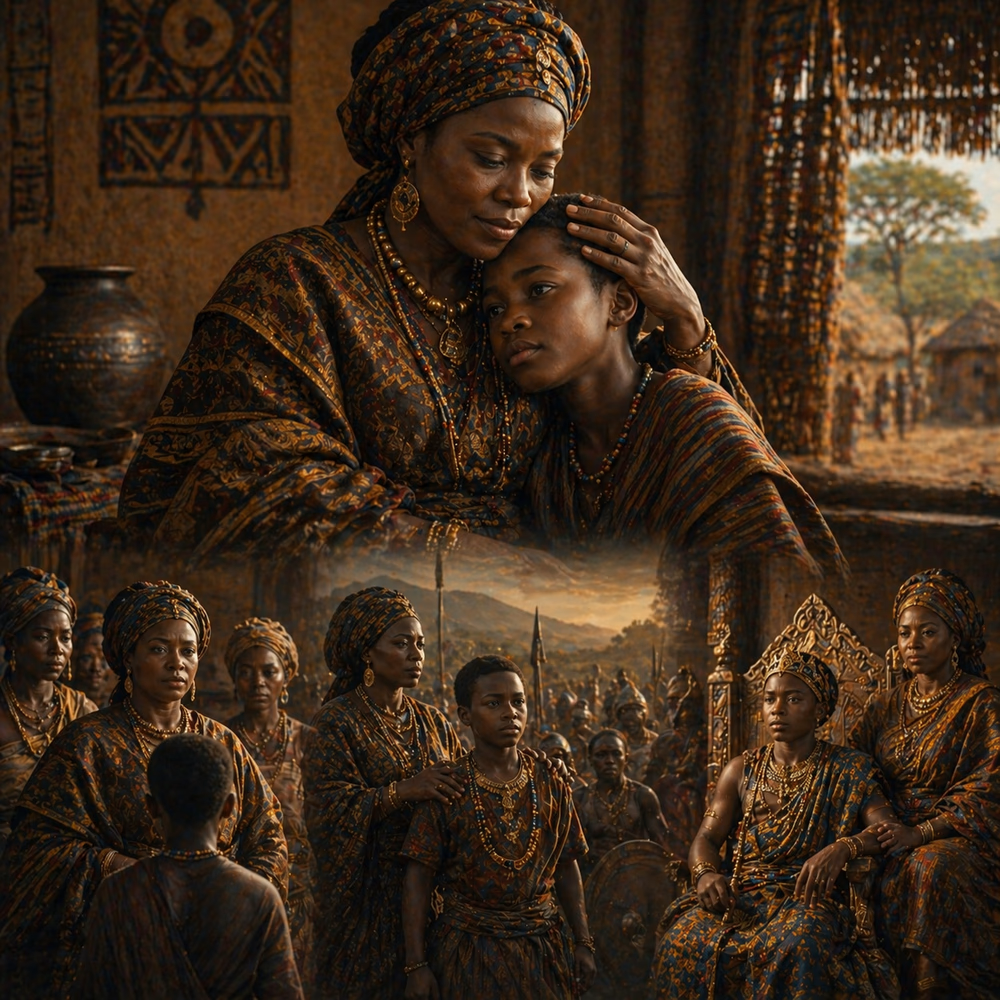
Before visible leadership comes formation.
The story of Sogolon Kedjou, mother of Sundiata Keita, reminds us that power often begins in obscurity.
Once ridiculed and marginalized, she became the guiding force behind a child who would found one of West Africa’s greatest empires.
She did not lead armies. She shaped destiny.
This maternal axis—quiet, enduring, foundational—is often overlooked in conventional historiography.
Yet it is here that the seeds of sovereignty are planted.
In portraying Mekatilili’s girlhood, I have sought to honor this dimension:
The slow, unseen formation of a woman who would one day stand at the center of resistance.
Legendary Women at the Edge of History 🌫️

Some women exist at the threshold between history and legend.
Tomoe Gozen, the Japanese warrior of the Genpei War, appears briefly in chronicles yet is never doubted.
Khutulun is recorded in multiple sources, her feats amplified but grounded in reality.
Urduja, though less verifiable, reflects cultural patterns too consistent to dismiss.
These figures endure because memory preserves what archives sometimes neglect.
Global Patterns of Female Power Across Civilizations 🌍📜
| Model of Power | Figure | Characteristics | Stability |
|---|---|---|---|
| Instituitional | Fu Hao, Agojie, Mongol princesses | Built into system | High |
| Dynastic | Nzinga, Yaa Asantewaa, Eleanor | Lineage-based authority | Medium |
| Charismatic | Joan of Arc, Mekatilili | Crisis-driven emergence | Fragile |
| Maternal | Sogolon Kedjou | Pre-political formation | Foundational |
| Legendary | Urduja, Tomoe | Memory-driven legacy | Variable |
What Determines Visibility of Female Power 🔍
Female leadership becomes visible when:
- Authority is tied to function rather than gender
- Societies prioritize continuity and survival
- Spiritual legitimacy outweighs rigid hierarchy
- Crisis disrupts established power structures
Why Female Power Is Often Hidden in History ❌
Female authority is often hidden because:
- Colonial narratives imposed external frameworks
- Oral traditions were undervalued or ignored
- Chroniclers minimized women’s contributions
- Later systems rewrote earlier norms
Writing Mekatilili Within a Global Tradition ✍🏾
Mekatilili wa Menza is not an isolated heroine.
She stands at the intersection of:
- Institutional legitimacy (cultural authority)
- Charismatic awakening (spiritual mobilization)
- Maternal grounding (communal continuity)
Her story is not invented in a vacuum.
It is drawn from a lineage that spans continents and centuries.
Through Echoes of Valor, I explore her early formation; the moral and cultural forces that shaped her.
In the companion poetry collection, Echoes Between Spear and Sky, I attempt to give lyrical voice to that inner world: the silence, the tension, the becoming.
Why Female Leadership Narratives Matter Today 🌍
Reclaiming these narratives is not merely an academic exercise.
It is:
- A restoration of historical balance
- A challenge to inherited assumptions
- An invitation to see leadership through a wider lens
When we recognize that women have long been architects of history, we begin to tell fuller, more truthful stories.
Continuity of Female Power Across History ✨
Across continents and centuries, women did not simply rise when called upon.
They were already there, embedded in the structures that sustained societies, guided transitions, and preserved identity.
What changes is not their presence, but our willingness to see it.
📘 Continue the Journey
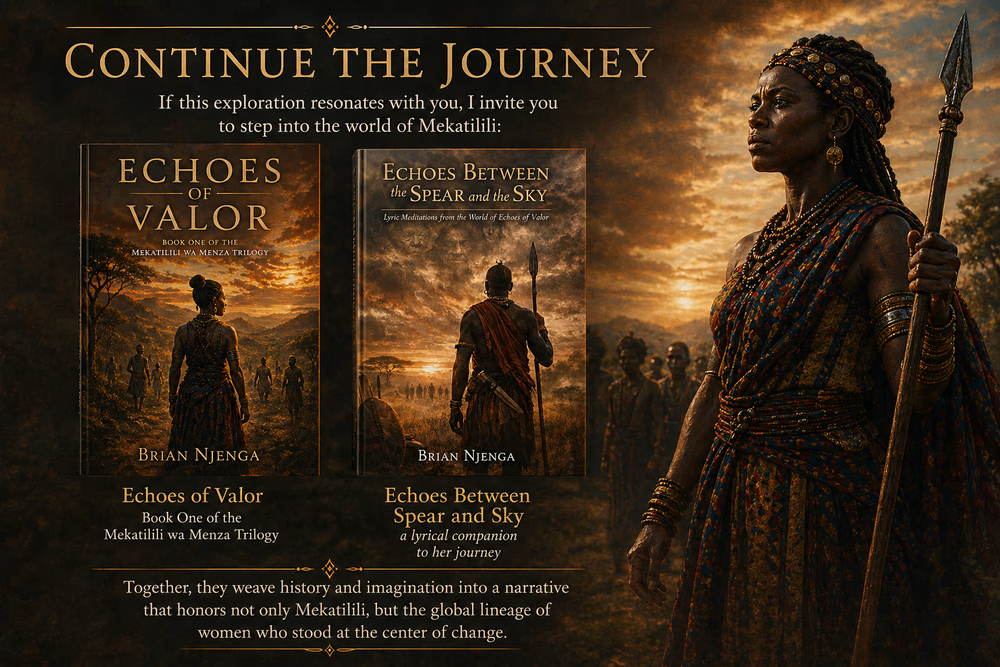
If this exploration resonates with you, I invite you to step into the world of Mekatilili:
Echoes of Valor — Book One of the Mekatilili wa Menza Trilogy
Echoes Between Spear and Sky — a lyrical companion to her journey
Together, they weave history and imagination into a narrative that honors not only Mekatilili, but the global lineage of women who stood at the center of change.
0 Comments
Leave a comment