
I’ve lost count of how many times I’ve heard it:
“Email is dead.”.
Usually from someone dazzled by the latest social platform or instant messaging app.
But here’s the thing:
I’ve built lasting client relationships, closed high-value projects, and kept entire pipelines warm thanks to email.
The inbox has outlived MySpace, Vine, and Google+, and it will outlive the next dozen “TikTok killers.”
Why?
Because email is the one channel you actually own.
There are no algorithms throttling reach, no paywalls between you and your reader—just a direct line.
Quiet Power of Email
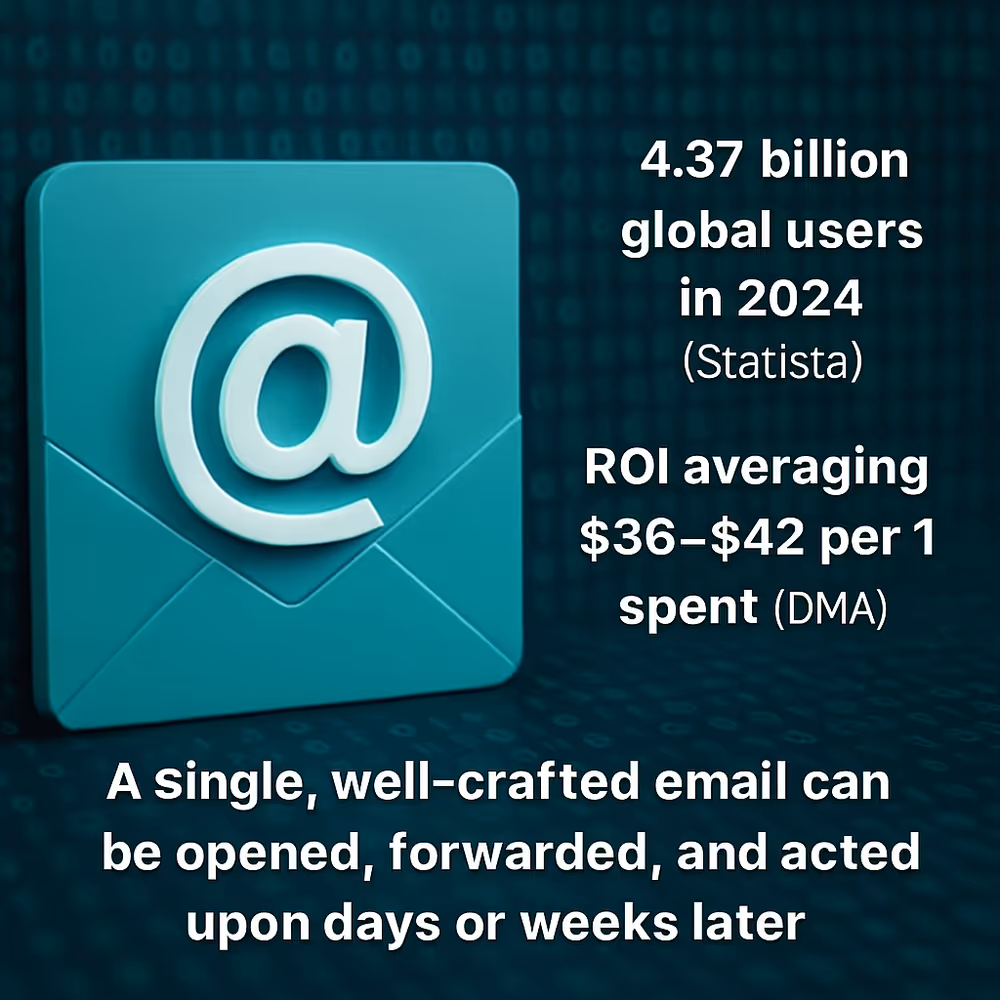
Numbers don’t lie:
- 📈 4.85 billion global users in 2024
- 💰 ROI averaging $36–$40 per $1 spent
- 🕰 A single, well-crafted email can be opened, forwarded, and acted upon days or weeks later
Unlike the fleeting nature of a tweet or a LinkedIn post, email sits there patiently in your reader’s inbox, waiting for their attention.
And when they open it, you’re not competing with a feed full of cat videos and breaking news alerts.
Rethinking “Nurture”
Too many marketers treat email like a megaphone—blast, blast, blast. I see it as a trust ledger.
I follow a give-before-you-ask cadence: three or four high-value, no-strings-attached emails for every direct pitch.
Sometimes that value is an actionable tip.
Sometimes it’s a curated link.
Sometimes it’s a short personal story about what I learned from a recent project.
💡 Tip: Micro-stories work wonders. Sharing a brief, real-life scenario builds far more trust than rattling off bullet points about your services.
Personalization: Beyond “Hi [First Name]”

Let’s be honest—most “personalized” emails feel about as human as an ATM.
Real personalization means context:
- Referencing the recipient’s industry pain points
- Following up on a post or article they’ve published
- Adjusting tone based on their own communication style
I’ve used AI tools to generate subject line variations tailored to different audience segments, but I always run a human filter over them to make sure they sound warm and authentic.
The goal is to make someone feel seen, not scraped.
Cold Outreach That Doesn’t Freeze People Out ❄️
The phrase “cold email” is misleading.
If you do it right, the email doesn’t feel cold at all.
Here’s my approach:
- Find mutual ground – Mention a shared connection, industry event, or even a mutual interest.
- Lead with a problem they care about – Not what you sell, but what they’re trying to solve.
- Invite a micro-commitment – Ask for a quick answer, opinion, or resource exchange—not a 45-minute call on first contact.
- Slow drip > hard pitch – Let the conversation breathe over 2–3 touchpoints before you make a formal offer.
The magic?
People start replying because you’re talking with them, not at them.
Off-the-Beaten-Path Tactics That Still Work

Here are five tactics I’ve used to spark engagement:
- 🎙 Audio intro emails – A short voice note attached to a cold outreach email humanizes you instantly.
- 📜 Story-driven drip series – A 3–5-part email arc that teaches through narrative.
- 📊 Seasonal “state of the industry” memos – Makes you the go-to voice for updates in your niche.
- 📋 Embedded polls – Drives interaction and helps you segment based on responses.
- 👋 Creative unsubscribe notes – Leave them smiling, even if they leave your list.
The Metrics That Actually Matter
If you only track open rates, you’re missing the point.
Instead, watch for:
- Click-to-open rate – Are people acting on what you send?
- Reply rate – Are they talking back?
- Forward/share rate – Is your content spreading organically?
- List health – Growth vs. churn over time.
These tell you if your audience sees you as a spammer or as someone worth keeping around.
Pitfalls That Kill Email’s Potential
I’ve seen marketers sabotage themselves by:
- Over-automating → robotic feel
- Growing the list too fast → poor deliverability
- Clinging to templates → generic tone
- Ignoring compliance laws → GDPR/CCPA headaches
💡 Rule of thumb: If you wouldn’t send it to a close colleague, don’t send it to a list.
My Organic Nurture Flow
Here’s the simple structure I use for clients and my own audience:
- Welcome series – Personal intro, sets expectations, delivers an early win.
- Value loop – Rotate between deep insights, curated resources, and soft asks.
- Reactivation sequence – Thoughtful win-back emails for dormant readers.
- Seasonal pivot – Shift tone/content based on industry trends or time of year.
Closing: The Inbox as Your Safe Harbor

Social media is a storm—fast, chaotic, and unpredictable.
The inbox is calmer waters.
If you treat email like a relationship, not a billboard, it will reward you with loyalty and conversions long after the hype machines have moved on.
Email isn’t dead.
Bad email is.
0 Comments
Leave a comment