
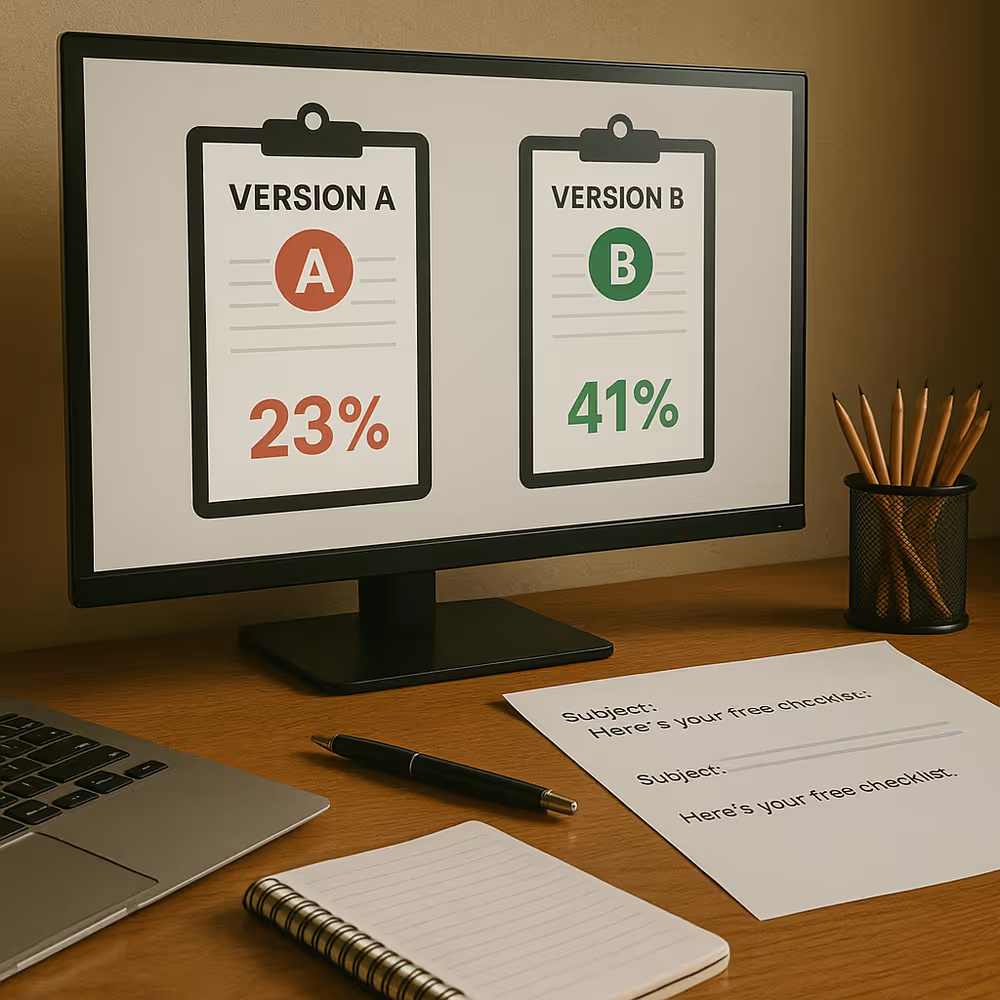
Let me start with a confession: I didn’t truly grasp the value of A/B testing when I first heard about it.
Like many writers, I trusted my gut.
I poured my best metaphors, clever CTAs, and punchy openers into my copy and assumed the results would speak for themselves.
Spoiler: they didn’t.
I once wrote pwhat I thought was the perfect subject line.
It was witty, evocative, and full of intrigue.
Then I paired it with a plain version: "Here's your free checklist."
Guess which one got double the open rate?
That’s right.
The plain one.
And it shook me in the best way possible.
🧪 What A/B Testing Actually Means for Copywriters

A/B testing isn't just for data nerds or UX designers.
For us writers, it's a microscope that reveals what actually resonates.
You test two variations of a single element: headline A vs. headline B, CTA 1 vs. CTA 2, long-form vs. short-form.
The magic?
You're not guessing.
You're learning in real-time what moves people to click, open, buy, or bounce.
But here's the catch: if you test everything at once, you'll learn nothing.
A clean A/B test isolates one variable—be it tone, structure, or length—and measures its direct impact.
🎭 Messaging vs. Mechanics: What You’re Really Testing
It took me months to realize I wasn’t just testing copy.
I was testing psychology.
- Tone: Casual vs. formal
- Framing: Scarcity vs. curiosity
- Structure: Listicle vs. narrative
- CTA language: "Start now" vs. "Claim your spot"
You're also testing how real people with inbox fatigue and scrolling thumbs respond in context.
It’s less about cleverness and more about connection.
🔦 My Biggest “Aha” Moments (So Far)
- That "clever" email? It bombed. But the clear one? It soared. Clarity > cleverness.
- One CTA I thought was too soft (“Want in?”) outperformed a more urgent one (“Don’t miss this!”) by 36%.
- A Substack subject line that was just a curiosity gap ("This changed my writing forever") beat a how-to headline 2:1.
I learned to let go of my ego and embrace experimentation.
My favorite lines?
Often outperformed by their simpler counterparts.
🎯 How to Plan an Effective Copy A/B Test
- Start with a hypothesis: "I believe this CTA converts better because it appeals to FOMO."
- Choose one variable to test at a time.
- Define success: Is it opens? Clicks? Comments?
- Test duration: Run it long enough to gather meaningful data (especially for email or ad campaigns).
- Document everything: Use a tracker to record variations and performance.
📊 Beyond CTRs: Interpreting the Results
Numbers tell a story, but context gives it nuance.
- High opens but low clicks? Maybe the email body underdelivered.
- Lots of engagement on one post? Check the tone and rhythm.
- A CTA that flopped? It might be timing or placement, not wording alone.
Treat the results like feedback, not judgment.
It’s data.
🎓 What A/B Testing Taught Me About Copy Itself

- Empathy wins. You're not writing for algorithms; you’re writing for humans.
- Less ego, more listening. Your hunches are starting points, not gospel.
- Iteration beats inspiration. One test leads to another—and each gets you closer to copy that sticks.
📁 My A/B Testing Toolkit (So Far)
- Kit: Subject line testing
- LinkedIn analytics: Carousel hook comparisons
- Substack: Headline performance
- Meta Ads Manager: CTA + visual pairings
- Google Sheets: My living tracker of all test results
💭 Final Thoughts: Why Every Copywriter Should Think Like a Scientist

I used to think A/B testing was about proving myself right.
Now I see it as a dialogue between my intentions and my audience's reactions.
Between my ideas and their real-world outcomes.
It’s taught me to release perfection and embrace iteration.
Because if you’re not testing, you’re guessing.
And great copy deserves more than guesswork.
0 Comments
Leave a comment