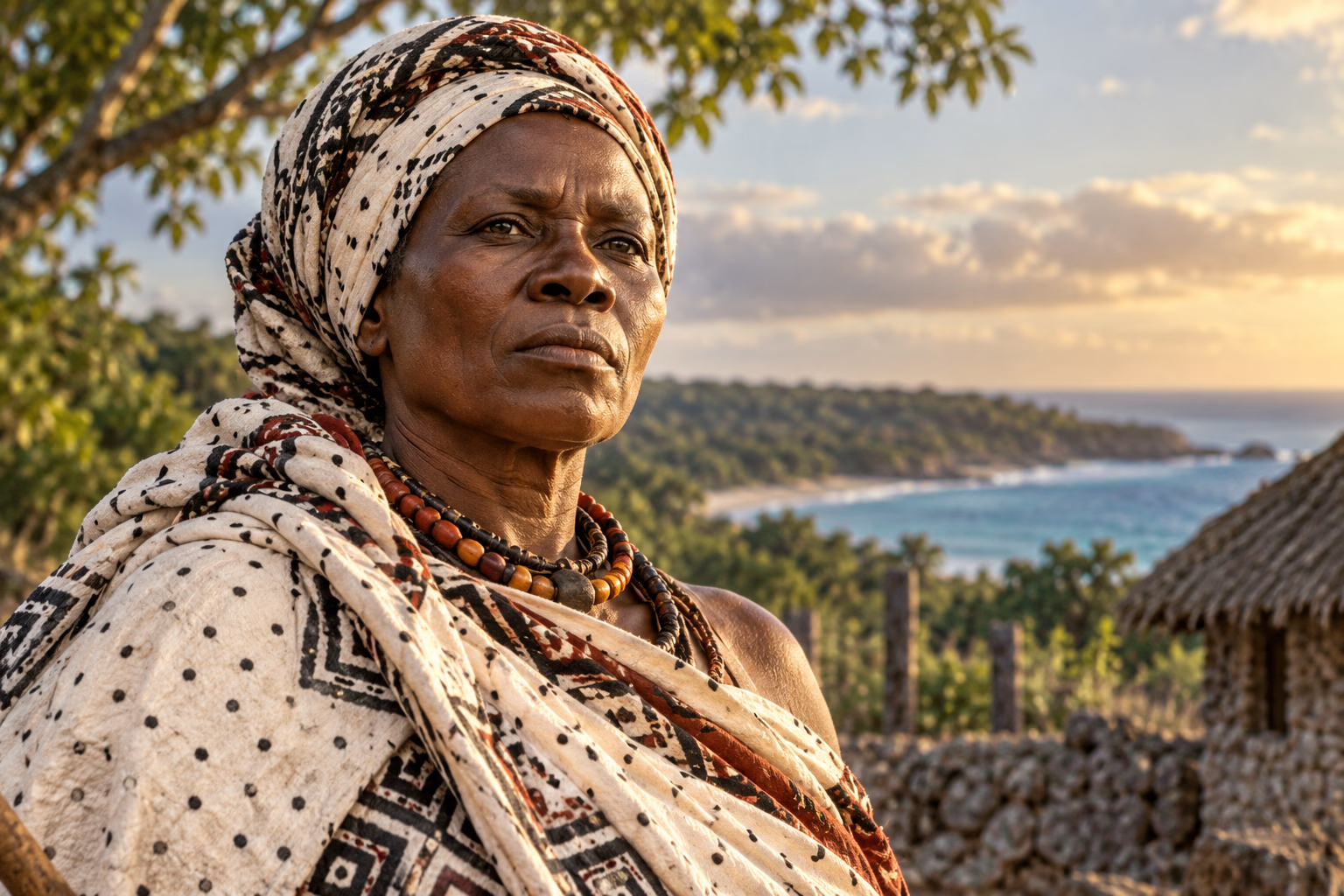
Artistic interpretation of Mekatilili wa Menza;
not a historical photograph.
01
BEFORE THE LEGEND
Recovering the Woman Behind the Name
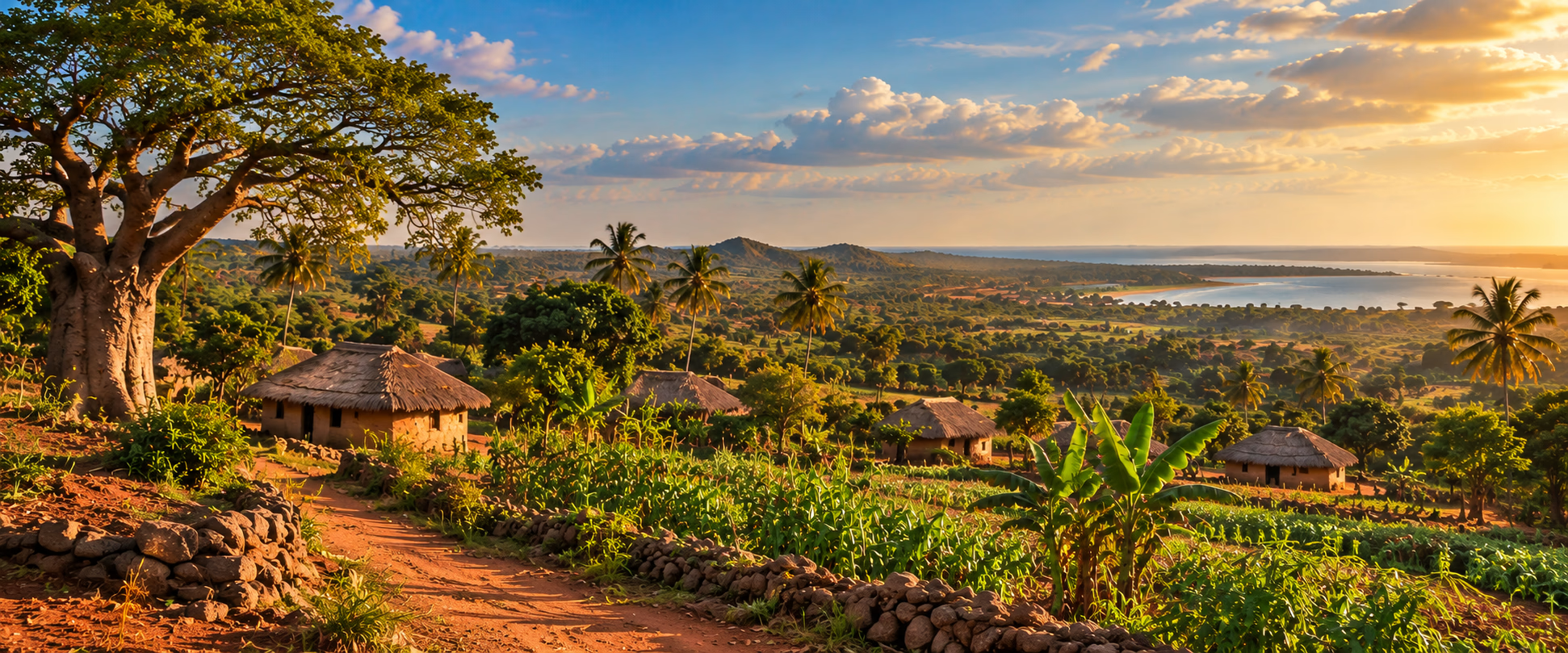
The Giriama landscape of Kenya's coastal hinterland.
Mekatilili wa Menza is remembered today as one of the most remarkable figures of resistance to British colonial rule in Kenya.
But recovering the woman behind the name is more complicated than the legend sometimes suggests.
She left no known autobiography, and the surviving written record is fragmentary. Much of what was recorded during her lifetime passed through colonial officials who viewed the resistance from the other side of the conflict.
Other memories survived through Giriama oral traditions and were recorded or interpreted by later researchers.
What remains, therefore, is not a single, complete portrait, but a constellation of evidence.
Some details can be traced through contemporary records. Others survive through oral memory and later historical scholarship.
Still others remain uncertain.
This biography brings those fragments together while keeping those distinctions visible—between what is documented, what is remembered, and what the surviving record cannot tell us.
The purpose is not to turn uncertainty into
certainty. It is to come as close as the evidence
allows to the woman behind the legend.
DOCUMENTED
Evidence preserved in contemporary records and other sources that can be directly examined.
REMEMBERED
Knowledge preserved by Giriama oral traditions and later recorded or interpreted by researchers.
UNCERTAIN
Details that surviving evidence cannot establish with confidence. These are acknowledged but not treated as fact.
02
HER WORLD
A Woman Rooted in a Living World
Artistic interpretation of the Giriama coastal hinterland, with thatched homesteads, red-earth paths, palms and distant coastline.
Before Mekatilili wa Menza became known through resistance, she was a Giriama woman living within a society that had its own institutions, obligations, beliefs and ways of understanding the world.
The Giriama are one of the nine communities collectively known as the Mijikenda, whose historical homeland lies along Kenya’s coast and its hinterland.
Their world was shaped not only by the settlements of the Indian Ocean coast, but by forests, cultivated land, homesteads, paths and sacred places that connected community, livelihood, memory and identity.¹
To understand Mekatilili, that world must come first.
Land, Livelihood and Belonging
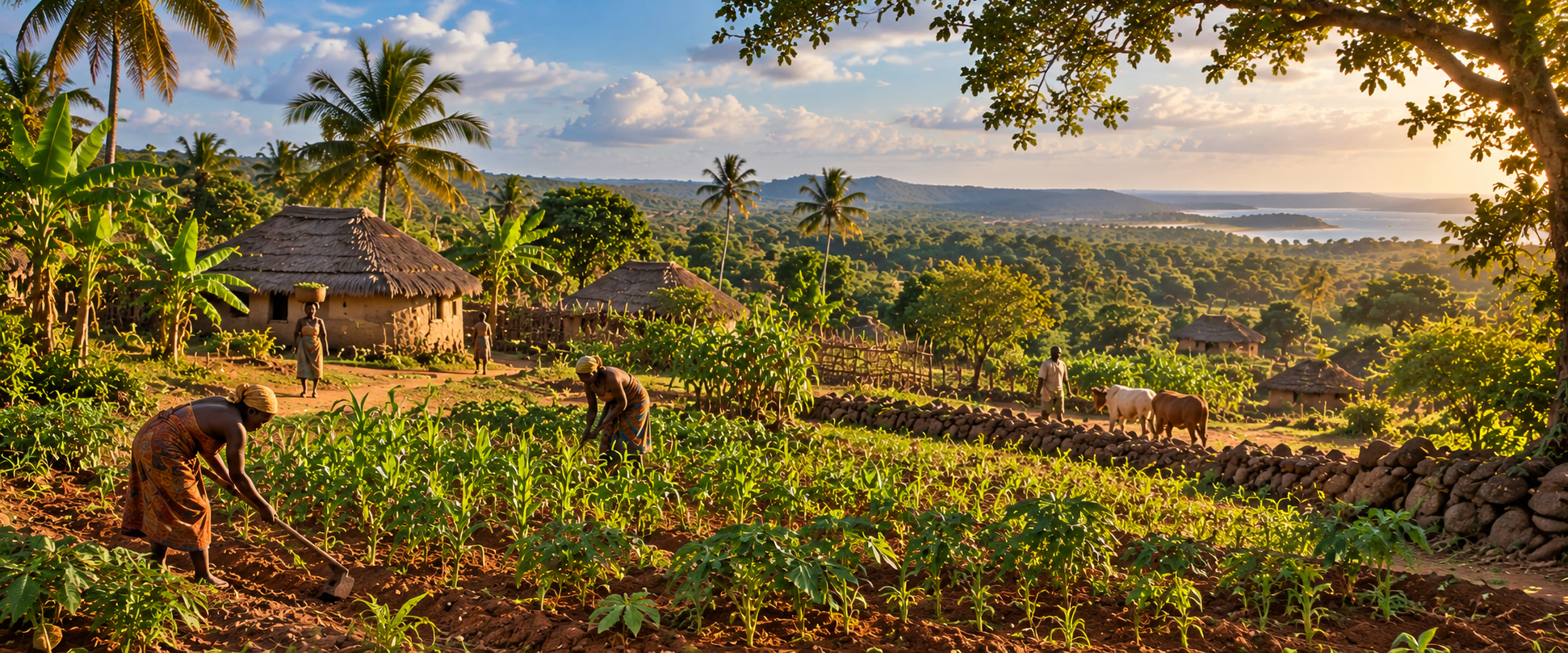
An artistic interpretation of rural life in the Giriama coastal hinterland. The scene evokes the connections between cultivation, homesteads and community; its specific farming practices, clothing and settlement details are not historically verified.
The Giriama were not a society without an economic or political structure waiting for colonial administration to impose one.
Long before British rule attempted to reorganise life in the coastal hinterland, Giriama communities had developed their own systems of cultivation, livestock keeping and trade.
Cynthia Brantley describes them as successful cultivators who kept cattle when circumstances allowed and became prominent traders of the Mombasa hinterland.²
Their economic life was connected to the wider coast. Giriama communities participated in trading relationships that linked the hinterland with Mombasa and other coastal centres, while their relative prosperity would later become an important part of the colonial encounter.³
This matters because the Giriama were not simply an isolated rural population confronted by an entirely unfamiliar economic system.
They already had one.
And it was a system in which land, production, household livelihood and exchange were bound together with social relationships and local authority.
The world Mekatilili inhabited was therefore neither static nor secluded. It was rooted in the coastal hinterland, but connected to a much wider regional economy.
The Kaya: More Than a Place
At the heart of Mijikenda historical memory stands the kaya.
The word kaya can be translated as “settlement” or “homestead,”
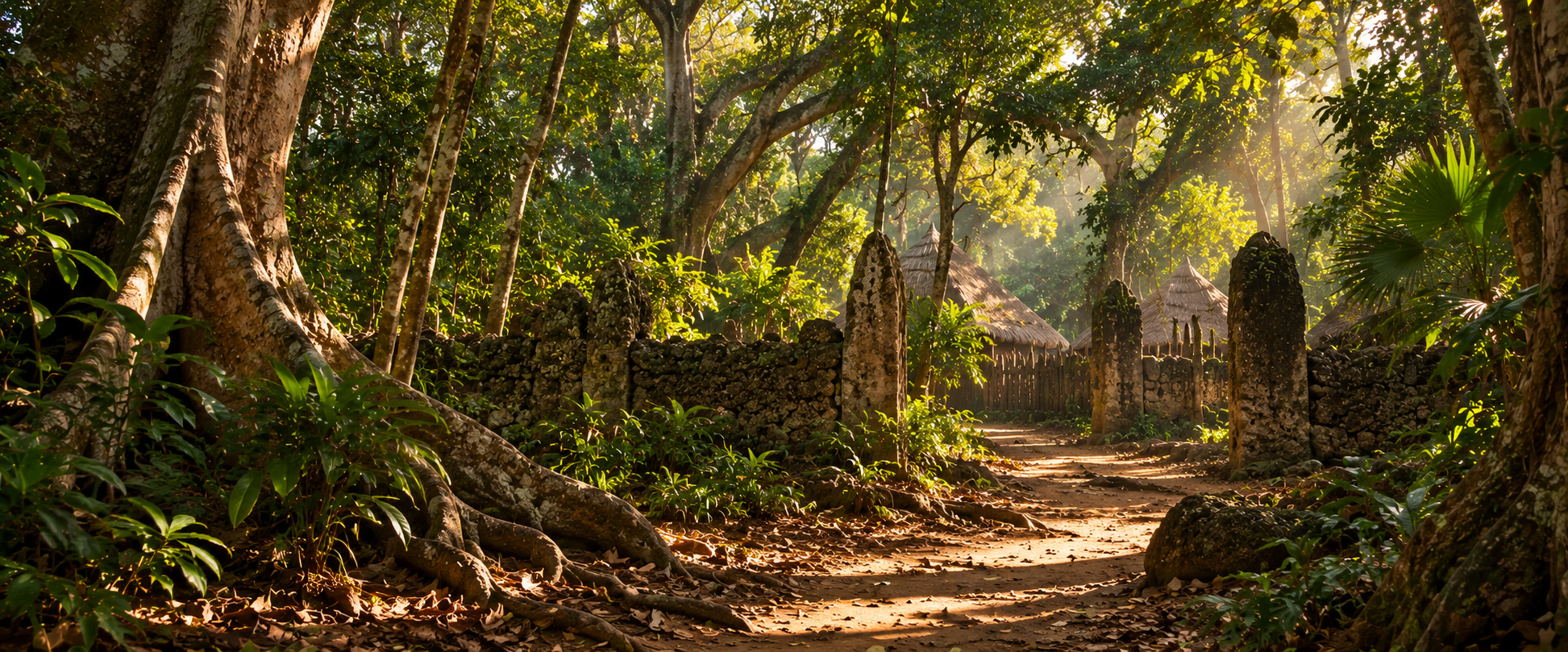
An artistic interpretation inspired by the forested landscapes associated with Mijikenda Kaya heritage. The depicted enclosure is illustrative and should not be identified with a particular Kaya or taken as an accurate reconstruction of a historical sacred site.
The word can be translated in the context of fortified settlements, but its significance reaches far beyond physical settlement.
The kayas became associated with ancestral memory, spiritual belief, community identity and systems of authority.
UNESCO describes them as sacred places and repositories of Mijikenda spiritual beliefs, while noting their continuing connection to a living cultural tradition.⁴
For the Giriama, the kaya also carried political significance.
David Parkin describes the Giriama kaya as an intrinsic source of ritual power and a source of legitimacy for elders dealing with crises affecting the wider community. He also describes it as an ultimate reference point for Giriama customs and identity.⁵
This is important context for understanding the society from which Mekatilili emerged.
The Giriama did not lack institutions of authority.
They had them.
Authority, Community and the Sacred
Pre-colonial Giriama political organisation was decentralised rather than centred in a single ruler.
Cynthia Brantley's research identifies a system based on age-sets and a council of elders known as the kambi.
The kambi formed part of a broader structure through which authority, order and responsibility were organised.⁶
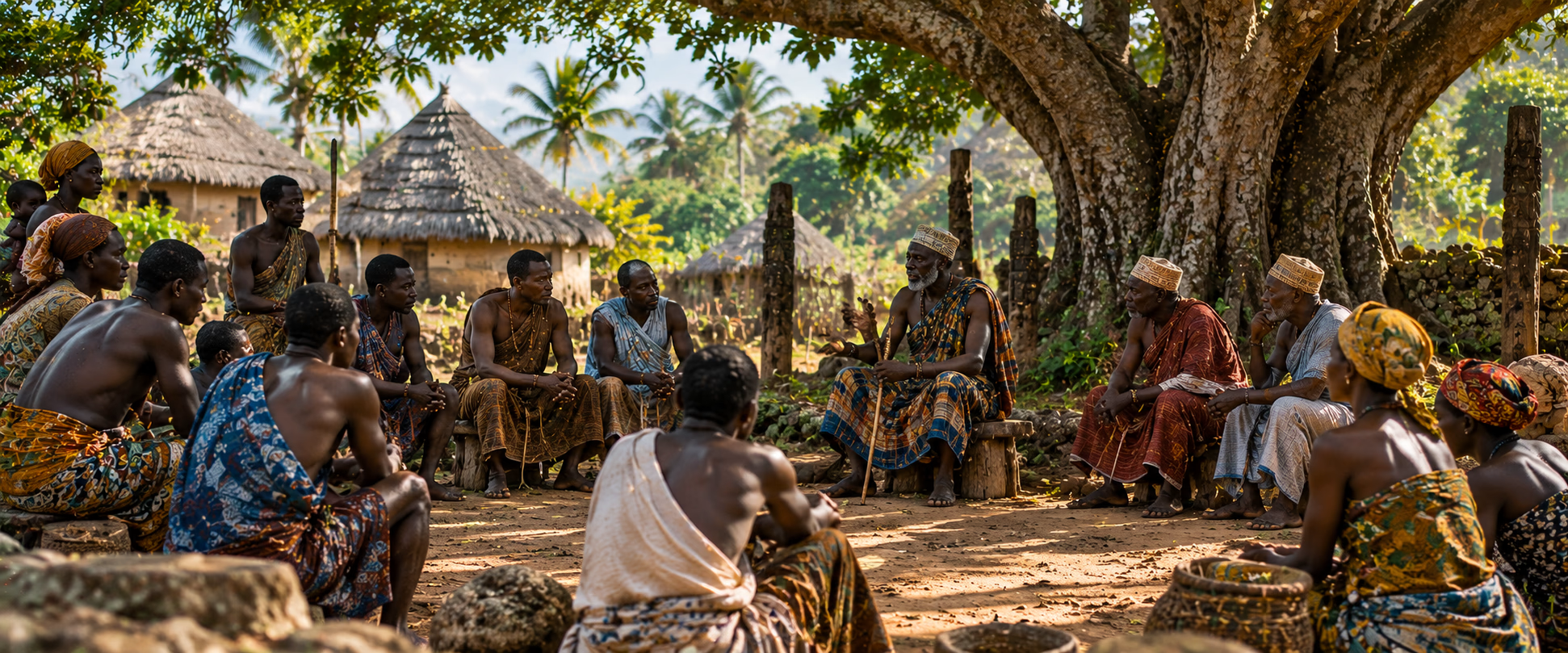
An imagined community gathering, created to evoke deliberation, relationships and customary social life in a coastal East African setting. The people, clothing and arrangement are artistic choices, not documentary evidence of Giriama governance in Mekatilili's lifetime.
This political structure was closely connected to the social and cultural world surrounding the kaya.
UNESCO's documentation of Mijikenda traditions likewise identifies the Kambi, or councils of elders, as custodians of the kayas and their associated cultural expressions.
The traditions connected to the kayas included governance systems, ethical codes, oath-taking, burial rites, initiation, reconciliation, marriage and other important communal practices.⁷
Political authority, therefore, cannot easily be separated from the sacred and social dimensions of Giriama life.
The kaya was not simply somewhere people lived.
It was part of how community remembered itself.
It was part of how authority was legitimised.
And it was part of how relationships between people, ancestors, place and tradition were understood.
Women Within the Giriama World
This is where caution becomes especially important.
The surviving evidence does not support a simple account of women's position in Giriama society.
Women's participation in ritual life is documented, including the custodial responsibilities held by post-menopausal women in practices associated with reproductive health.
Yet these forms of cultural authority should not be confused with equal access to political decision-making.
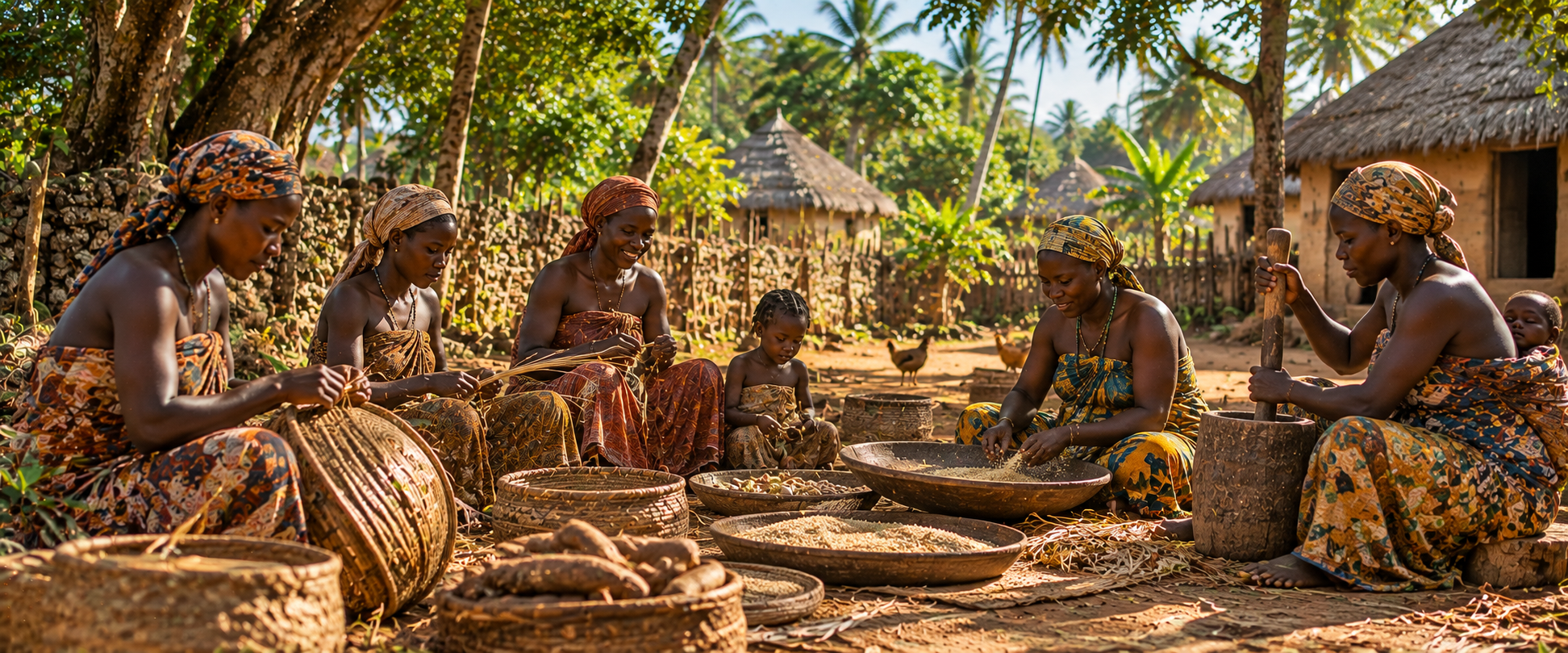
An artistic interpretation of women's everyday work and shared community life in a rural coastal setting. The scene is intended to restore women's labour and relationships to the narrative; it does not establish the precise practices, dress or social roles of Giriama women in the early twentieth century.
Mekatilili's emergence as a figure of resistance must be understood against this distinction. She operated within a society with established customs and institutions, but her public role was remarkable precisely because women's access to formal authority was constrained.
Her influence appears to have drawn on the political crisis confronting the Giriama, the weakening of existing institutions, and her ability to mobilise people around concerns about colonial interference.
Her widowhood may have shaped the opportunities available to her, but that explanation requires further verification before it can be presented as settled fact.
Mekatilili was neither wholly outside Giriama society nor simply a representative of its established order. Her historical significance lies in how she acted within a changing society, at a moment when colonial pressure, internal divisions and the defence of Giriama autonomy converged.
What Was Worth Defending?
It is easy to begin Mekatilili's story with colonialism.
Doing so begins too late.
Before colonial officials imposed new demands upon the Giriama, there was already a functioning social and economic world: people cultivated land, maintained households, participated in trade, organised authority through age-sets and elders, and maintained relationships with sacred places and inherited traditions.² ⁶ ⁷
That world was not unchanging.
Nor was it idyllic.
But it was theirs.
And when British colonial pressure intensified, it did not encounter a population without institutions or an economy of its own. It encountered a decentralised society whose political structures, economic interests and relationship with land were already deeply established.³ ⁶
An artistic interpretation of an inhabited coastal landscape, bringing together themes of home, livelihood, community and belonging. It is a symbolic reconstruction, not a historical photograph or a verified view of Mekatilili's home.
Brantley's account is particularly important here: she argues that British efforts to draw Giriama labour into the plantation economy collided with an existing economy in which Giriama were successful producers and traders.³ The resulting conflict was therefore not simply a question of whether people would obey a new authority. It involved competing ideas about labour, economic independence and the organisation of community life.
To understand why resistance became possible, we must first understand what already existed.
Before we ask what Mekatilili resisted, we must
understand what she belonged to.
03
A SOCIETY UNDER PRESSURE
When Colonial Rule Reached Deeper
British colonial rule did not confront the Giriama only through proclamations, officials or the presence of an unfamiliar administration.
Its reach deepened when political control became an attempt to redirect the labour, resources and social relationships of an established society.
The Giriama were not simply subsistence farmers waiting to be drawn into a colonial economy. They participated in productive agriculture, trade and the wider coastal economy.
Their livelihoods and social institutions had developed through their own responses to changing circumstances.
Colonial demands increasingly threatened their ability to sustain that way of life on their own terms.
In 1912, British administrators turned their attention more directly toward the Giriama interior.
Labour Recruitment
Labour shortages affecting coastal plantations and government projects helped drive a new campaign to recruit Giriama men for wage labour.
Administrative control and economic demands became intertwined: officials sought not merely to govern the population, but to make its labour available to colonial priorities.
Taxation
Taxation added another point of confrontation.
Demands to collect taxes and pressure on local headmen to assist with recruitment brought colonial authority into direct contact with community obligations and existing systems of leadership.
For those resisting the new demands, the issue was not simply the payment of money or the decision to take a job.
It was also who had the power to make such demands, whose interests they served, and whether local authorities could refuse to cooperate.
Land and Dispossession
Land belongs in this story, too—but its place in the chronology matters.
The wider colonial transformation of the coastal economy and the Giriama's later loss of land were part of the history of dispossession.
Brantley's account, however, distinguishes the immediate labour and administrative confrontation from the land restrictions and losses that followed colonial military action. We should not collapse these developments into one simultaneous event.
Traditional Authority under Strain
These pressures also strained established forms of authority.
Giriama social and political life was not organised around a single central ruler whom the British could simply replace.
Authority was distributed through institutions, age-set relationships, elders and other forms of customary and sacred life.
Colonial officials' efforts to recruit labour and collect taxes therefore depended, in part, on securing cooperation from local leaders whose authority and obligations did not necessarily align with colonial objectives.
Confrontation and Resistance
The resulting confrontation cannot be explained by one grievance alone.
Labour recruitment, taxation, administrative intrusion and the weakening of established institutions converged in a crisis over autonomy.
In 1913, opposition became more visible and organised. Mekatilili wa Menza emerged within that struggle, mobilising people against colonial interference; the conflict escalated into open resistance in 1914.
The question was no longer only what colonial rule demanded of the Giriama. It was whether the Giriama would retain the authority to determine the terms on which their society lived.